


India extends Internet Ban in Occupied Kashmir
- In another measure to constrict the constitutionally enshrined liberties of the Kashmiri people, the government in Indian-occupied Kashmir has extended its ban on high-speed internet until November 12, across 18 of the 20 districts of the disputed territory.
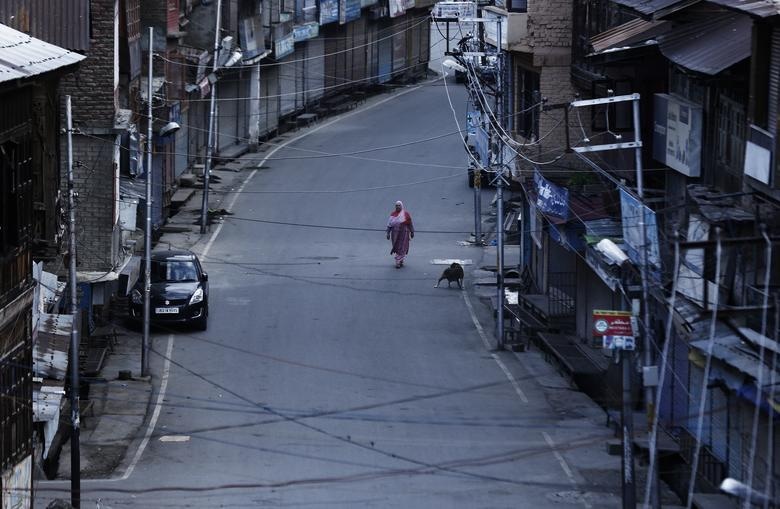

In another measure to constrict the constitutionally enshrined liberties of the Kashmiri people, the government in Indian-occupied Kashmir has extended its ban on high-speed internet until November 12, across 18 of the 20 districts of the disputed territory.
In an order issued by the administration stated that the restrictions being placed on high-speed internet “felt absolutely necessary in the interest of the sovereignty and integrity of India”, indicating security reasons for this decision. In this disputed Himalayan region, high-speed internet has remained completely cut-off since last August, in the aftermath of the abrogation of Article-370 of the Indian Constitution, when India revoked the semi-autonomous status of the region of Jammu and Kashmir - thereby imposing a communications blackout and a complete lockdown, in an attempt to choke the insurgency.
The administration also added that the country’s security agencies “apprehended that anti-national elements might misuse [high-speed connections] for carrying out activities inimical to the public order besides persuading the youths to join militancy” - as a response to which digital rights activists have consistently denounced the internet restrictions as some of the worst in the world.
Human rights organizations and advocacy groups such as Amnesty International and Human Rights Watch have repeatedly called for the urgent restoration of cellular services and internet access in the region, as it deprives the populace of a fundamental right to mobility, communication and information.
It can be observed that the Modi-led Indian government’s draconian strategy to completely lockdown Occupied Jammu and Kashmir has not only completely eroded the region’s primary source of economic potential in tourism (with a loss of $5.3 billion in lockdown), but also has worsened their citizen’s access to basic services - not to mention the flagrant disregard for human rights in the disputed territory.
Paired with the onset of a global pandemic which has crippled the global system of public healthcare and governance, the unambiguous impinging of fundamental liberties in Kashmir have thrust ordinary citizens into untenable conditions.



















Comments
Comments are closed for this article.