


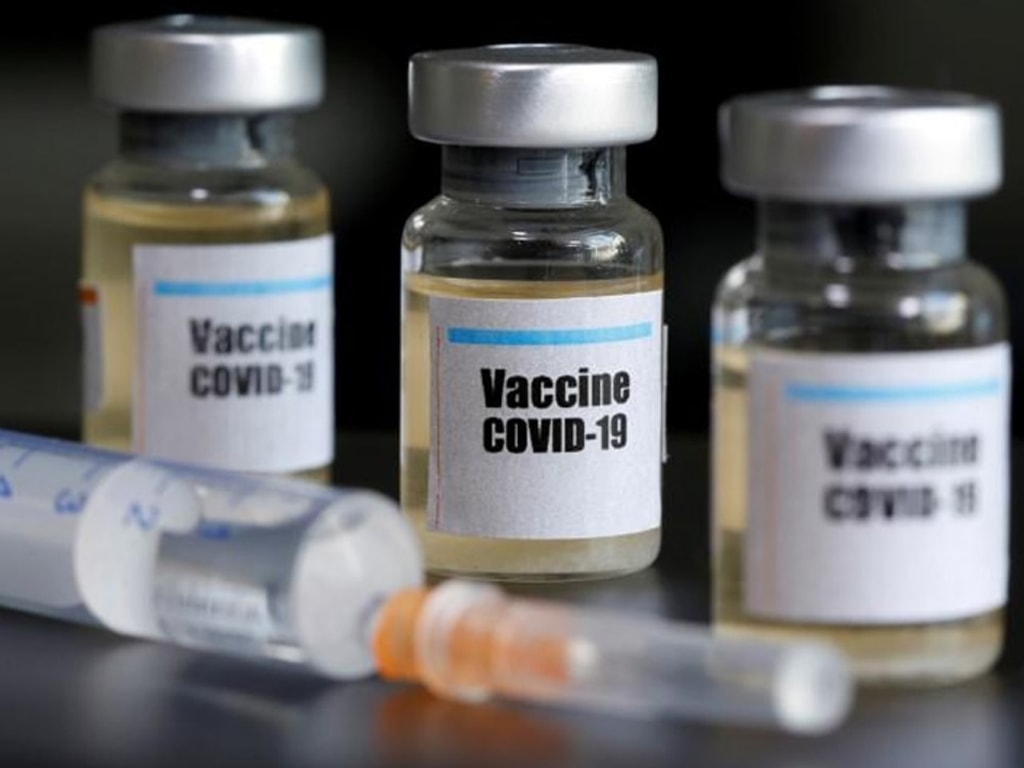

LONDON: AstraZeneca has suspended global trials of its experimental coronavirus vaccine after an unexplained illness in a participant in Britain, casting doubt on prospects for an early rollout.
The vaccine to combat COVID-19, which Britain's AstraZeneca is developing with the University of Oxford, has been described by the World Health Organization as probably the world's leading candidate and the furthest developed.
However, AstraZeneca said on Tuesday it had paused trials, including late-stage ones, to allow an independent committee to review safety data, and it was working to minimise any potential impact on the timeline.
"It is obviously a challenge to this particular vaccine trial," Britain's Health Secretary Matt Hancock told Sky News.
The pause follows reports that the United States was aiming for fast-track approval before November's presidential election.
The stakes are high because AstraZeneca, Britain's largest drugmaker by market value, has already agreed to supply close to three billion doses to governments across the globe.
This is more than any other vaccine project. Asked whether the pause would set back the development process, Hancock said: "Not necessarily, it depends on what they find when they do the investigation".
Most states will contribute financially to developing the vaccine, even if the trial fails.
'ROUTINE ACTION'
Britain's medical regulator said it is urgently reviewing information available to determine whether trials can restart as quickly as possible.
A New York Times report citing a person familiar with the situation said a participant based in Britain was found to have transverse myelitis, an inflammatory syndrome that affects the spinal cord and is often sparked by viral infections.
Whether this was directly linked to AstraZeneca's vaccine remains unclear, it said. AstraZeneca declined to comment.
"People fall ill for a multitude of reasons, and the project team will now be reviewing in depth what is the cause of this person's illness and whether it is linked to having been given the vaccine or not," said Doug Brown, Chief Executive of the British Society for Immunology.
The Financial Times quoted people associated with the trial as saying it could resume early next week, after the study's independent data monitoring board has investigated.
AstraZeneca officials were not immediately available to comment on that report.
The suspension triggered a fall of as much as 3% in AstraZeneca's shares, which have the second biggest weighting in the FTSE 100 index, but were trading 0.5% up by 1540 GMT.
The British trial began in May with more than 12,000 participants, from 5 years old to over 70.
The U.S. trial, with a targeted 30,000 participants, was launched last week for the vaccine AZD1222, which is also in late-stage clinical trials in Brazil and South Africa.
Additional trials are planned in Japan and Russia, with a targeted 50,000 participants globally.
South Korea said it would look into the suspension and review its plan to participate in manufacturing the vaccine and health ministry official Yoon Tae-ho added such suspensions of clinical trials were not rare "as various factors interact".
This was echoed by Germany's Leukocare, which is working on a vaccine similar to AstraZeneca's but is at an earlier stage.
"When you are inoculating 20,000 people, it is a foregone conclusion that at some point you will have severe adverse events. As soon as a link to the vaccine can clearly be ruled out, the trial continues," CEO Michael Scholl said.
Immune-related conditions such as inflammations, however, would be subject to particular scrutiny, he added.
MONKEY VIRUS
The Oxford vaccine is designed to instruct human cells to make distinguishing parts of the coronavirus. That allows the immune system to build an arsenal against future infections.
A harmless virus known as adenovirus is used to bring the genetic instruction into the body, an approach which is also being pursued by China's CanSino, Russia's Gamaleya institute or Johnson & Johnson.






















Comments
Comments are closed for this article.