


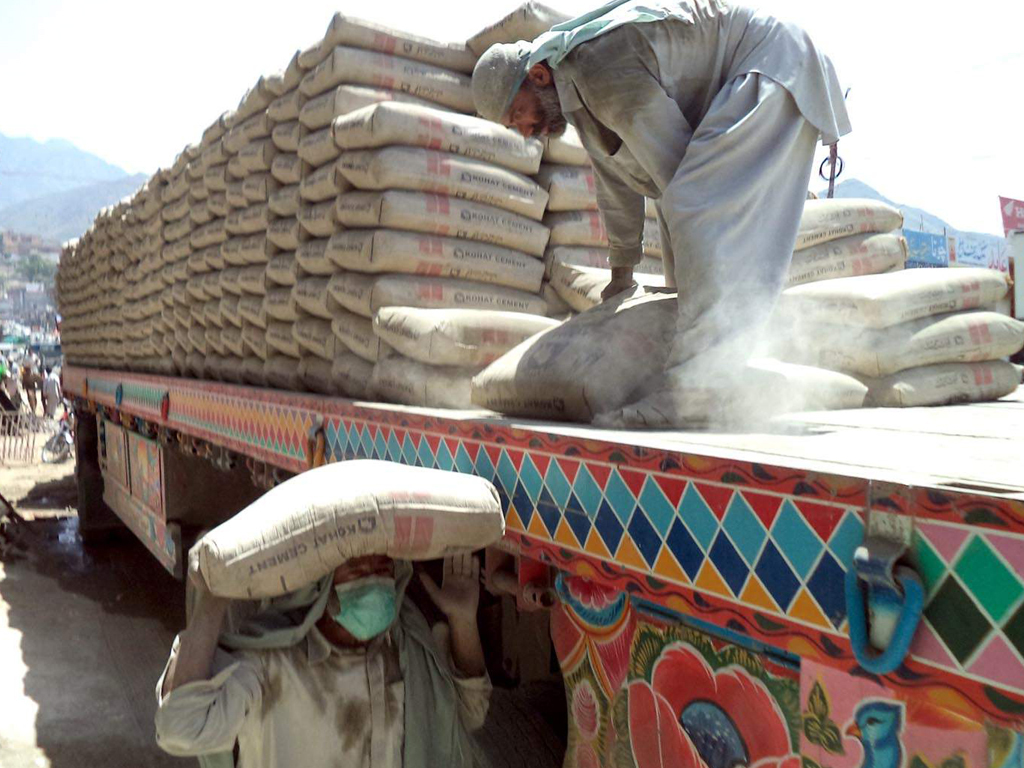

There is a very clear upward trajectory expected from volumes in cement as FY21 fast rolls in. Demand had started to resurrect already in June and took a strong positive turn during July (up 40% against Jul-19) as the federal government announced a comprehensive construction package that is set to shore up demand for building materials manufacturers while making real estate development highly lucrative.
In Aug-20, estimates by Topline Securities suggest, dispatches will be up 6 percent year on year (down 27% month on month)—which could have been higher had the monsoon not brought major parts of the southern zone to a standstill during the last few days of the month. Cumulatively, in 2M, dispatches have expectedly grown by 22 percent against the corresponding period last year (local: 19%; exports: 36%).
The tide has certainly turned from the travesty of FY20 that not only slowed domestic markets down due to reduced economic activity and a bleak outlook on fundamentals but also due to the outbreak of the coronavirus that resulted in country-wide lockdowns. During the year, the industry suffered from low price retention, high cost of production, high overheads, high cost of borrowing and shrinking demand. The resultant financials are conceivably feeble with companies watching their margins evaporate; some entirely.
However, it would seem the industry has put that phase behind it as the government has been making deep concerted efforts to promote construction in the country—the so-called low-hanging fruit in terms of low-skilled employment generation. The package together with the Naya Pakistan Housing Program has all the makings of a catalyst for investment—including tax waivers, cash and interest subsidies for end-users and buyers, reduced FED, and no questions asked on source of funds. This time-bound amnesty will generate a lot of interest in folks as it comes with great potential returns and an opportunity to legitimize money.
That’s local demand. One caveat here is that most of the projects that have so far been announced under the umbrella of NPHP are in Punjab and up. Sindh and other southern regions have remained at the bleachers. Prominent private sector players part of ABAD have expressed their keen motivation to launch affordable and high-end housing projects under the package—many of the salient features of these plans have been shared with BR Research by the ABAD team—but as such, the provincial government in Sindh has remained silent, and mostly absent from any dialog.
For better or for worse, the north zone will likely accrue more benefit from the schemes as projects are already taking off in the region while the south zone may remain substantially behind. This means, cement players in the south will be selling more clinker overseas than cement in domestic markets unless they want to sell to the north zone as demand expands. For that reason alone, while FY20 was a better year for cement manufacturers located in the south, the north zone would witness a healthier recovery during the ongoing year.





















Comments
Comments are closed for this article.