


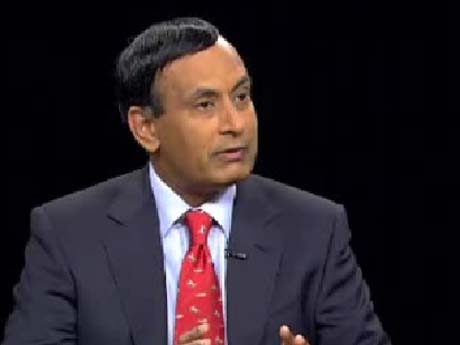
 Of late Pakistan's role as a partner in the UN-mandated war on terror is beset with profound confusion. Not that earlier it was not, it always was - to know how and when, revisit the WikiLeaks' account of Prime Minister Gilani's take on the CIA-operated drone attacks in our tribal areas. But the way confusion is galore and is mushrooming by the day, in the aftermath of the Memogate scandal and the Nato attack on Pakistan's two border posts, brings to mind Mirza Ghalib's poignant confession 'nah hath baag per hai nah pa hai racab mein'. As if we are in a free fall. In her testimony before a Senate committee on Wednesday, Foreign Minister Hina Rabbani Khar profusely extolled Husain Haqqani's role as ambassador in Washington and declared the memorandum a 'fabricated document' without realising that he was sacked by none other than the prime minister even before a probe into his involvement, suggesting the gravity of the charge against him. Then, consider how smugly the government kept alive the unconfirmed report, now contradicted by the UAE government, that President Zardari has firmly rejected its foreign minister's request not to seek American vacation of the Shamsi airbase. Even the 1992 lease of the base by the then government of Nawaz Sharif to the UAE is being used by the government for point-scoring, without letting the public know who agreed to its re-letting by the UAE to the United States for drone attacks. For a good 10 years, Pakistan was in the thick of this war on terror, incurring huge loss of life, economic bankruptcy and rampant instability, and for what, the people were never told. The irony is, even today when the chickens are coming home to roost as to why and how Pakistan became and then preserved as a partner to this thankless alliance, there is no clear answer. Indeed at this eleventh hour as to what are the terms of engagement that bind Pakistan to remain in the partnership, there is nothing in hand. Conceded, as an absolute ruler, prompted more by his need to win international legitimacy for his illegal take-over than by any other consideration, General-President Pervez blindly led Pakistan into this so-called war on terror. And that he hadn't bothered about the consequences of his one-sided partnership that is understandable; given that dictators as long as they last never think themselves to be answerable to the people. But it has been quite a while now that he is no more on the scene to call the shots. So one would like to know why the present government that never tires of claiming to be 'from the people and for the people' didn't bother about where the documents are which commit Pakistan to this unholy alliance - if at all there is any documentation of this commitment. Isn't it shockingly scandalous that even as late as now, we do not know whether the United States is still at the Shamsi airbase, or if any other airbase or military facility is still under its occupation? Or, how is it that after a joint session of parliament had unanimously demanded an instant halt to drone attacks, Predators still fly from bases on our soil. Who acquiesced in the American move to convert its embassy in Islamabad into the CIA's largest station in Asia and hundreds of additional staff given permission to stay put in this country under falsely claimed diplomatic cover, one would like to know. Perhaps, the time has come that the government should lift the curtain of ambiguity and let the people know as to what is the nature and scope of commitments Pakistan has made to the US-led alliance. If there is no hard copy of any commitment it should be disowned. If some accord is warranted by national interest and has to be retained, it should be endorsed by the parliament. The government must undertake reappraisal of the whole gamut of partnership, and jettison all that is not in black and white. Simultaneously, a move should be initiated to firm up, clearly and unambiguously, the terms of engagement as a partner in the US-led alliance. For far too long we seem to have been fighting someone else's war; the time has finally come to look back and decide if that should continue. Copyright Business Recorder, 2011




















Comments
Comments are closed for this article.