


While reviewing the internal security situation at its recent meeting, the Defence Committee of the Cabinet decided to strengthen cooperative mechanism between the federal and provincial governments. Towards that end, the Committee directed the Ministry of Interior to set up a national crime database at the Centre. To say the least, it is a case of better late than never. Crime database is important for provision of instant access to crime record of suspects, and to create fresh information for new offenders.
It is routinely used in most other countries for better policing. Our police usually has information on local criminal elements, and can nab them easily. But at this point in time the problem is not just common crime; terrorism poses a major threat to the peace and security of this society. Such criminals usually are highly mobile, and hence difficult to catch. Unless arrested red-handed, terrorists and their facilitators can wriggle out of police hands for lack of sufficient information. A centralised pool of information can help overcome all these issues.
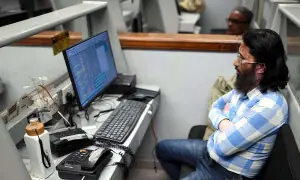
That would mean provision of computerisation facilities in all police stations. At present, most of them function in medieval conditions. Even in urban police stations, it is not unusual to find the writer of the most important piece of case information, the First Information Report, charging money from a complainant to buy paper for the purpose. Police stations require urgent modernisation. Computerisation complete with the CNIC number, which opens up the door to such details as a person's family and residential information and finger prints, would be of great value to the intelligence and investigation wings of the police. It can go a long way in addressing internal security issues.
Putting more than one computer in a police station and linking them with a central database, may look like an expensive proposition, especially whilst the government is cash-strapped. It hardly needs saying though that ensuring security has to be the top priority of the government. No effort or resources should be spared to put in place a functional centralised crime database. Equally important is the need for the different intelligence and investigation agencies to share information. There have been instances in the recent past wherein one agency had information on an impending terrorist attack, but it was not conveyed in a timely fashion to those dealing directly with the situation. Clearly, the various security agencies, their intelligence and investigation wings need to better co-ordinate the information sharing processes and mechanisms.





















Comments
Comments are closed for this article.