


A new global financial crisis would hit Asia harder than the last one, especially nations heavily exposed to offshore markets or still repairing budgets from the 2008-2009 crisis, credit ratings agency Standard and Poor's said on Monday. The agency, which incurred Washington's wrath at the weekend by cutting its AAA rating by a notch to AA+, said it was not predicting a rerun of the credit crisis that crippled markets and tipped the world economy into recession three years ago.
But it warned of more sovereign downgrades in Asia next time around, if its assumptions turned out to be wrong. "If a renewed slowdown comes, it would likely create a deeper and more prolonged impact than the last one," S&P said in a statement. "The implications for sovereign creditworthiness in Asia-Pacific would likely be more negative than previously experienced, and a larger number of negative rating actions would follow. We wait to see." S&P said it assumed Europe's debt crisis and Washington's debt problems were unlikely to lead to "abrupt dislocations" in the financial systems and economies of major developed nations.
On that basis, it added, its historic downgrade of the US credit rating would have no immediate knock-on impact on sovereign borrowers in the Asia-Pacific. It cited the Asia Pacific region's sound domestic demand, relatively healthy corporate and household sectors, plentiful external liquidity and high savings rates - though it listed New Zealand, Japan and Vietnam as exceptions to this.
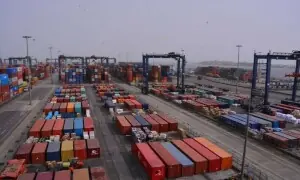
The S&P statement took on a much darker tone when considering the possibility that its assumptions were too rosy, noting that Asia still relied heavily on exports to the West. "Given the interconnectivity of the global markets, an unexpectedly sharp disruption in developed-world financial markets could change the picture," it said, noting that the US and European economies could again contract or stagnate.
"In this scenario, the experience of the global financial crisis of 2008-2009 shows that export-dependent economies with large exposures to the US and/or Europe would feel the most pronounced economic impacts," S&P said. "It's not likely things would be very different this time."
The agency listed those countries particularly vulnerable to disruptions in offshore capital markets as Pakistan, Sri Lanka, Fiji, Australia, New Zealand, South Korea and Indonesia. It also said several nations, again including New Zealand, were also still repairing their government finances and could be more constrained in responding to a fresh global crisis.

















Comments
Comments are closed for this article.