


Handlooms sector urges government to bring down cost of doing business
The Chairman of All Pakistan Handloom and Traditional Textiles Manufacturers and Exporters Association (APHTTMEA), Muhammad Aasim Shah, has sought government functionaries' intervention for removal of budget irritants confronting textile industry by spurring the cost of doing business, and urged the government functionaries to bring down the cost of doing business to a reasonable level immediately.
Talking to newsmen here at APBUMA House, he said that the government should bring the value-added textile industry out of woe, which is contributing heavily--overall 67 percent--earning of foreign exchange for the country.
The situation itself speaks about the fact that textile sector has been totally neglected and no attention has been paid for revival of this industry. He elaborated that textile industry is already facing many problems including higher cost of doing business, worsening law and order situation and continuous outages of power supply which have badly affected the performance of the sector.
"The cut-throat competition with our regional competitors and downturn in the economies of developed countries have added fuel to the fire, and the situation has dragged our textile manufacturers in a state of inertia."
He said that the government should bring the value-added textile industry out of woe, which is contributing heavily overall 67 percent earning of foreign exchange for the country. He expressed strong concern over scarcity of gas and electricity for textile industry, causing huge production losses besides losing exporting markets world-wide.
Aasim said the industry was refused gas supply by the Sui Northern Gas Pipelines (SNGPL) since July 1 in spite a clear-cut priority announced by the government in federal budget 2009-10. The spokesman added that about 70 percent of the industry is exclusively dependent on gas supply by the SNGPL network. But a disconnection has put the production cycle at halt with no clue as when the supply would be resumed to the industry. "Resultantly, the textile industry is experiencing both announced and unannounced load shedding for five to eight hours a day on independent and grouped feeders, incurring 21 percent production loss a day and present disconnection of gas supply has doubled this loss," he said.
Shah urged upon president Asif Ali Zardari and Prime Minister Yousaf Raza Gilani to continue the concession in the name of research and development for exporters so that cost of business could be made competitive. He said that this facility must be continued for next four years because taxation rate and ERF is higher in Pakistan than other countries.
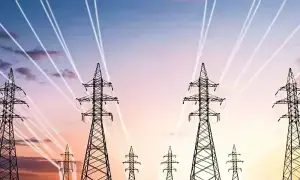
He said that load shedding of natural gas and electricity was emerging negative effect on the economy. Hundreds of industrial units had so far been shut and lakhs of workers rendered jobless. He said that immediate and serious tackling of the load shedding issue by the government is imperative to save the industrial sector from being destroyed completely.
He said hundreds of industrial units have been closed due to energy shortfall but the government is showing no interest to overcome the energy crisis, lamented Aasim.
He asserted that the textile industry that has more than 60 percent share in country's export--27 percent in industrial value-addition and 38 percent in sector employment--is under serious threat over persistent load shedding. He said that exporters are unable to meet their export orders. He advised the government to consider the use of hydel resources by building water reservoirs and power generation units, a cheaper way to produce energy. He asserted that Pakistan should also go for alternative energy resources like other countries. In this connection he mentioned that Germany is producing more than 21 000 mw and India 7000 mw power through wind energy.










Comments
Comments are closed for this article.