


Can't live with them, can't live without them. That's what this week's bond market slide says about investors' view of US Treasuries. Fears of contagion from the eurozone debt crisis brought investors to Treasuries in the first place, reaffirming the bonds' position as the "go-to" safe haven asset.
Until investors grew optimistic this week that Greece would avoid catastrophe, Treasuries had rallied for more than two months, shrugging off US deficit concerns and even fears the United States itself could default in August.
Though some have considered German Bunds, precious metals and investment destinations such as Canada and Australia, analysts say none of them have the combination of size and liquidity that makes a financial safe haven truly safe.
"Right now there's just no alternative," said Ira Jersey, interest rate strategist at Credit Suisse in New York. "That's not to say that if people really thought there was significant credit risk in the US liquidity wouldn't dry up, it might, but we're not there yet."
Of course, some warn that Europe's troubles may just be a preview of what's to come. Debate over raising the US debt ceiling will heat up ahead of Aug 2, which is when the Treasury Department says it can no longer stave off default. PIMCO's Bill Gross, the most vocal Treasury bear, has minimised Treasury holdings in his $245 billion Total Return Fund, the world's largest bond fund. Instead, he has invested more heavily in derivatives, other US fixed income and added to holdings outside of the US.
The presence of such high-profile Treasury critics only highlights the fact that there is no shortage of alternative investments to US government bonds. "It's a big discussion right now," said Chris Jarvis, at risk management firm Caprock Risk Management in Hampton Falls, New Hampshire. "I think investors are going to have to recalibrate where to go as a safe haven." Where they can go - and feel safe - is the key question.
With more than $9 trillion in outstanding volume of marketable US Treasuries and $500 billion in bonds, on average, changing hands every day, no other market comes close to its size.
"US Treasuries are everywhere, you can not escape them," said Jim Vogel, interest rate strategist at FTN Financial in Memphis, Tennessee.
German government bonds also benefit from safe haven appeal and have been most often cited as an alternative to US risk.
At around $1.6 trillion, however, the market remains too small to replace U.S debt. Australia and Canada have also attracted greater investment as the commodities boom also boosts their economies. While these markets may benefit at the margin from US fiscal fears, they too cannot absorb the amount of investment that Treasuries can.
Other markets can't offer the same pricing guarantees for larger trades, said Chris Ahrens, interest rate strategist at UBS in Stamford, Connecticut.
The markets are also too small to absorb the investment needs of foreign central banks and other investors, many of who may also be restricted on what percentage of debt they can hold from only one issuer, he said.
"Even though the Treasury market has gotten big, so have some of these reserve managers," he said.
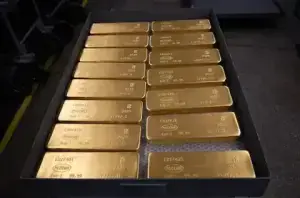
Gold has also been cited as an attractive alternative, especially to those that see the dollar as likely to weaken further if the economy stalls. The price of spot gold has risen $200 since January to over $1.500 on increased demand.





















Comments
Comments are closed for this article.