


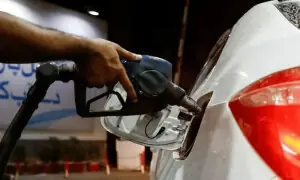
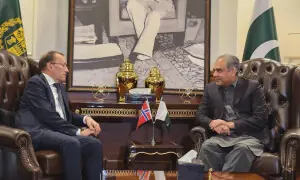
The Prime Minister's decision to call a meeting of Council of Common Interest was announced in the aftermath of his meeting with the Punjab Chief Minister Shahbaz Sharif, who reportedly expressed serious concerns over the massive gas shortage in the province with obvious repercussions on output as well as employment levels.
Considering that output in Punjab is a significant proportion of the country's Gross National Product (GNP), it is evident that the continuing gas shortage would have an impact on the national growth rate and consequently on revenue collections in the value-added mode. Those who argue that the value-added tax, renamed as the Reformed General Sales Tax (RGST) by the Finance Minister, is not yet implemented would do well to revisit the existing tax structure wherein sales tax and excise duty are both in the value-added mode.
In this context it is relevant to note that the government generated 540 billion rupees from the sales tax and 134 billion rupees from excise duty in 2009-10. In other words, around 49 percent of all revenue collections in the last fiscal year were in the value-added mode.
It is also pertinent to note that the budget for the fiscal year 2009-10 envisaged revenue generation of 499 billion rupees (40 billion rupees less than what was realised) while revenue collection from excise duty was estimated at 153 billion rupees (around 18 billion rupees less than collections). In other words, the Federal Board of Revenue did manage to generate the revenue that was identified in the budget, though the actual revenue realised under each budgetary estimate varied.
In the current fiscal year, with the government envisaging the implementation of the RGST when the budget was announced in June, total revenue collection under the sales tax was targeted at 675 billion rupees (a collection that is premised on expanding the ambit of the sales tax, as well as higher productivity, which would automatically generate greater revenue) and excise duty enhancement to 153 billion rupees (identical to the budgetary estimate of 2009-10).
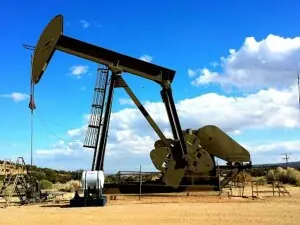
Analysts are generally agreed that the rise in sales tax collections, as envisaged in the current year's budget by 135 billion rupees, was unrealistic even if the RGST was implemented. The reason: the failure of the government to meet the demand for a critical input, namely energy, third year running. Thus the concerns voiced by the Punjab Chief Minister are relevant not only to his province, but also to other provinces suffering from a dearth of energy and provided at an escalating price.
There is general agreement that the government must prioritise its development expenditure to focus on meeting the country's energy needs first and foremost as GNP, exports, availability of products in the local market, employment as well as inflation remain hostage to this deficiency. In addition, given the continued controversy surrounding the rental power projects, not laid to rest by the third party audit, which concluded that the awarding of RPP contracts violated procurement and bidding laws of the country, these projects require a revisit.
The newly appointed Chairman of the Federal Board of Revenue, Salman Siddique, has stated that the government is facing a serious financial crisis and is not in a position to extend any industrial relief package. As a former Finance Secretary he is in a position to know the government's financial position. However, what is disturbing is that four finance secretaries have been appointed in a period of less than three years.
This number may correspond to the four finance ministers that this government has appointed. Considering that the country is on an International Monetary Fund (IMF) programme, repeated changes in a key post are untenable. One would advise the government not to make transfers and postings so frequently, as they send a wrong signal to multilateral and bilateral donors.
What is critical is for the government to sit with members of the opposition and take all political parties on board with respect to an economic strategy. The list must be exhaustive and also include those parties, which did not opt to participate in the February 2008 elections. Skeptics argue that the Pakistani governments, autocratic or democratic, have invariably been held hostage to unscrupulous elements routinely engaged in violations of public procurement and bidding rules as a reward for being out of government, during which time they were harassed by law enforcement agencies on charges of corruption.
This must stop. Additionally, atypical corruption refers to expenditure approval that is not routine, for example the awarding of contracts for the RPPs. These should not be the prerogative of the cabinet alone but of the entire body politic in an effort to ensure that everyone is on board.











Comments
Comments are closed for this article.