


Brazil's first female president, Dilma Rousseff, was to take control of Latin America's biggest economy Saturday from outgoing popular leader Luiz Inacio Lula da Silva in a triumphant handover ceremony. Rousseff, a 63-year-old economist and Lula's former cabinet chief, was to be driven through the capital Brasilia in an open-top Rolls-Royce to her new destiny, under the watchful gaze of police snipers and warm, gray skies that threatened rain.
For many of the estimated 70,000 people turned out to see the event, it was more a farewell for Lula than a warm welcome for his successor. "I came to see Lula, because he governed well, and I hope she will do so too, because we need a president that wants to end the violence and the slums," one Brasilia local, Vera Pereira Silva, told AFP.
Rousseff is taking over a country with an economy that grew an enviable 7.6 percent in 2010, enjoys recently discovered oil finds that could make it a big-league exporter, has won a significant role on the world stage, and is preparing to host the 2014 football World Cup and 2016 Olympics. But huge challenges loom ahead.
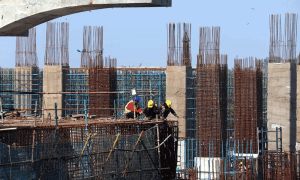
Growth is expected to slide to 4.5 percent in 2011, inflation is well above the government target at an estimated 5.9 percent and rising, and an aim to cut public debt from 42 percent to 30 percent is likely to meet resistance, not least because Brazil desperately needs more and better infrastructure. Brazil's currency, the real, has more than doubled in value against the dollar during Lula's eight years in power, and looks set to rise further, undermining the competitivity of Brazilian exporters. Rousseff, a leftwing former guerrilla who was tortured in prison in the 1970s for opposing the then-military government, will also inherit a diplomatic row with Italy.
On his last day in power, Friday, Lula sparked the spat by refusing to extradite an Italian former militant, Cesare Battisti, convicted of four murders in the 1970s. A furious Rome had withdrawn its ambassador in protest and warned it would up the pressure to have Battisti handed over. Brazil's Supreme Court is to examine the legality of Lula's decision in February when it returns from its recess, handing Rousseff the dilemma until then.

















Comments
Comments are closed for this article.