



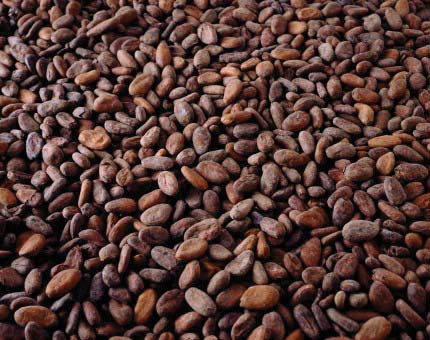
 NEW YORK/LONDON: Cocoa futures continued lower to close on Friday at another three-year low, while sugar slipped pressured by big supplies from northern hemisphere crops and by declines in a few other commodity markets.
Coffee was little changed in indecisive, choppy dealings.
Commodity investors' got out of some of their riskier assets while global stocks and the euro rose after nearly all European Union leaders agreed to build a closer fiscal union to address the region's debilitating debt crisis.
Cocoa futures have fallen more than 22 percent since early November, reaching extremely technically oversold levels on the relative strength index. The market has been pressured by plentiful nearby supplies and bearish macro sentiment.
March cocoa on ICE dropped $64, or 3 percent, to end at $2,067 a tonne, while London March cocoa settled down 31 pounds, or 2.3 percent, at 1,338 pounds per tonne. Both settlements were the weakest since November 2008.
Cocoa arrivals at ports in top grower Ivory Coast reached 422,430 tonnes by Dec. 4, up from 400,043 tonnes in the same period a year ago, data from Bourse du Cafe et Cacao (BCC) showed.
ICE raw sugar futures tumbled, following two volatile, yet sideways, sessions with pressure coming from expectations of big supplies from northern hemisphere producers such as Russia and Ukraine.
"We are in a transition to a surplus," said James Kirkup, head of sugar brokerage at ABM AMRO Markets (UK) Ltd.
Benchmark ICE March sugar futures sank 0.84 cent, or 3.5 percent, to 23.29 cents a lb by 12:50 p.m. EST (1750 GMT), remaining within the ranges of the two previous volatile sessions. Kirkup saw 22.71 cents as a key support level.
"We're having our third session of yo-yo trading. From my perspective there's little substance," Jeff Bauml, a senior vice president with brokerage R.J. O'Brien & Associates in New York.
March white sugar futures on Liffe tumbled $18.20, or 2.9 percent, to end at $605.20 per tonne.
Consultancy Kingsman SA trimmed its 2011/12 global sugar surplus forecast by almost 1 million tonnes to 8.2 million tonnes, while the US Agriculture Department lowered slightly its forecast for domestic sugar supplies.
Coffee futures traded on both sides of unchanged, with the arabica market trapped in a roughly 30-cent range for more than a month.
"Markets have been jittery, in low volumes," said Andrey Kryuchenkov, a fund manager with VTB Capital who tracks soft commodities markets, in a reference to the EU summit.
March arabica coffee on ICE was up 0.3 cent at $2.2895 a lb.
"We got down to $2.2585 then just got a bounce off of that. There's speculative buying at lows," said Boyd Cruel, softs analyst for Vision Financial Markets in Chicago.
Dealers also tracked news from a major coffee conference in Vietnam, where industry officials and experts said global prices could rise because tight supplies may extend until May, when fresh beans from Brazil, Vietnam, Indonesia and Colombia arrive in the physical market.
March robusta coffee on Liffe settled up $15 at $1,962 a tonne.




















Comments
Comments are closed for this article.