



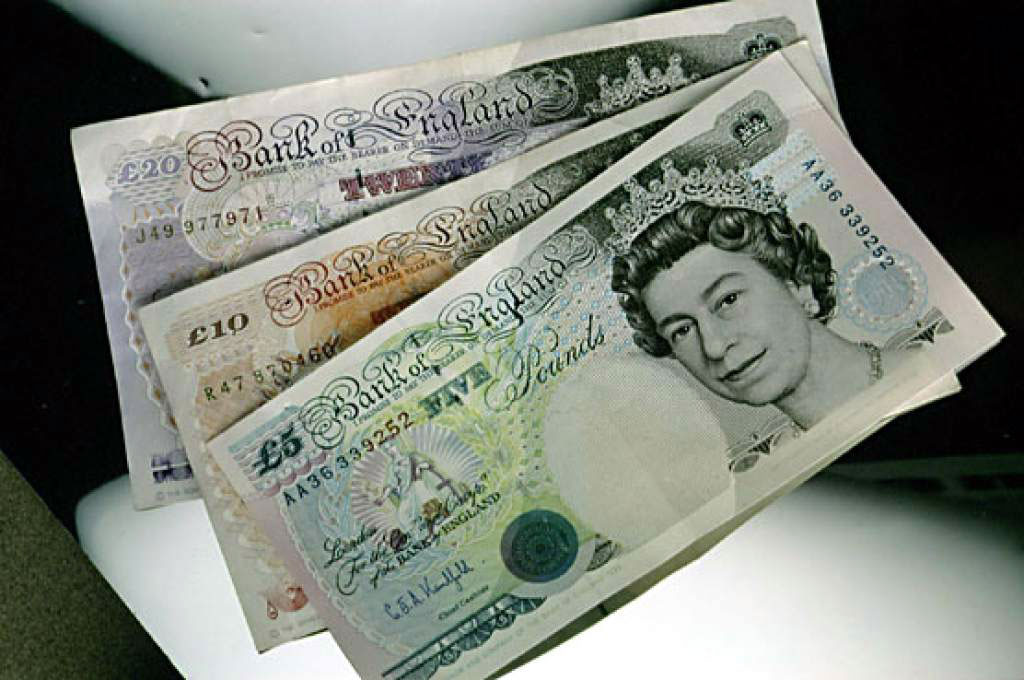
 LONDON: Sterling slipped to a four-week low against the euro on Wednesday, with inflation-lagging wages data not doing anything to challenge the view that the Bank of England will keep interest rates on hold after their first increase in a decade.
The pound had briefly climbed on the numbers, which showed workers' total earnings, including bonuses, rose by an annual 2.2 percent in the three months to September - slightly above an average forecast in a Reuters poll of a 2.1 percent rise.
But after hitting a five-day high of $1.3215, sterling quickly slipped back, giving up all its earlier gains to trade flat at $1.3175 by 1015 GMT.
Against the euro, sterling slipped as much as 0.6 percent on the day to 90.14 pence, its weakest since Oct. 20.
"There were quite a lot of expectation for some pretty solid wage data ...and that was why Cable (sterling/dollar) got bought up beforehand," said Mizuho's head of hedge fund FX sales Neil Jones, in London.
"Relative to economist surveys it came in slightly higher, but 2.2 percent wage data and 3 percent inflation doesn't really bode that well... If we really want to get further rate rises you need better wages growth than this."
Data on Tuesday had put UK consumer price inflation at 3.0 percent in October.
Wednesday's numbers also showed the number of people in work in Britain fell by the most in more than two years in the three months to September, in the latest sign of weakness in Britain's Brexit-bound economy.
At the same time, the inactivity rate - a measure of people not in work and not seeking a job - rose by the most in nearly eight years, the Office for National Statistics said.
"The number of eligible adults not working or seeking work increased slightly. This pushed up the inactivity rate for the second half of this year, which may explain the knee-jerk reaction lower in the pound once the data was released," said City Index research director Kathleen Brooks.
With the UK labour market data out of the way, traders will now be focused on US inflation data due later in the day, to see whether the core rate of price growth can bounce to a level that puts further rate rises in 2018 on the table.
Investors are also keeping a close eye on Brexit developments. Prime Minister Theresa May's blueprint to leave the European Union emerged unscathed on Tuesday from a first day of debate in parliament on legislation to sever ties with the bloc.
The debate is expected to last weeks.




















Comments
Comments are closed for this article.