


New Jersey became on Friday the first US state to mandate sharp greenhouse gas reductions by 2050 to help fight climate change. The law, signed by Gov. Jon Corzine, a Democrat, makes New Jersey the latest state to bypass the Bush administration by setting mandatory regulations to fight emissions of gases that scientists link to global warming.
"We want to send a message to Washington. Wake up, get with the program and start doing something about greenhouse gases," Corzine told reporters at Giants Stadium on the eve of former Vice President Al Gore's international Live Earth concerts.
The Global Warming Response Act mandates cuts of greenhouse gas emissions throughout New Jersey's economy by about 16 percent by 2020 and 80 percent by 2050 in the country's most densely populated state.
Scientists say heat-trapping emissions need to be cut by that much to prevent the worst effects of global warming including deadly storms, flooding and droughts. US states have taken action on their own and in regional groups because the federal government has not yet passed mandatory regulations on the emissions.
President George W. Bush opposes mandatory cuts of the gases, favouring voluntary goals. The US Congress is mulling several bills that would cut output of the gases by employing market mechanisms to trade the right to pollute. But whether a bill will pass before Bush leaves office in 2009 is a matter of keen debate.
California, the world's eighth largest economy, recently enacted a tough greenhouse gas law. Like New Jersey's, it also mandates an emissions cut by 2020. But its long term goal of cutting emissions 80 percent by 2050 is a target, not a hard mandate. Environmentalists said the New Jersey law is tougher than California's because its 2050 target is enforceable.
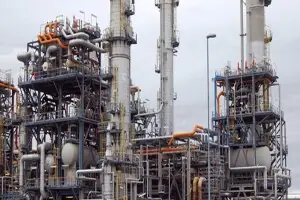
Gore, who also spoke to reporters about the New Jersey law, said he would talk about it in future presentations of his slide show about global warming. New Jersey, which has a hub of oil refineries and chemical plants in its northern region, aims to fight emissions by promoting renewable energy like solar and wind power and by helping consumers to conserve power.
Public Service Enterprise Group, owner of New Jersey's largest utility, said PSEG supports the law but that it would lead to higher power prices. "I believe customs are willing to pay for the higher costs associated with the environmental benefits," the company's Chief Executive Ralph Izzo told Reuters at the ceremony where Corzine sighed the bill.
The New Jersey Business and Industry Association opposes the law, saying it would raise fees and give sweeping powers to state agencies. The law also seeks to deal with emissions from vehicles, the largest source of the emissions in New Jersey, by enhancing public transportation, car-pooling and the shipping of goods by rail instead of truck.
But even environmentalists said the effort would be a tough fight as renewable energy currently only provides a tiny portion of the state's power. "We need to be careful of congratulating ourselves on this legislation because the hard work is yet to be done," said Doug O'Malley, the field director for Environment New Jersey, a green group that helped form the law.





















Comments
Comments are closed for this article.