



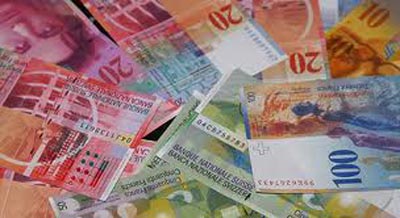
 LONDON: The safe-haven yen and Swiss franc lost ground on Wednesday as risk appetite recovered, although most investors were on the sidelines before a Federal Reserve policy decision later in the day.
European stocks rose early on Wednesday, while China's stock market saw the biggest gains in two weeks, shrugging off MSCI's decision not to add mainland shares to one of its key benchmark indexes.
The Fed concludes its two-day Federal Open Market Committee (FOMC) meeting later on Wednesday. Fed Chair Janet Yellen is expected to strike a balanced tone, keeping rate hike expectations in the coming months in play, but could flag Brexit risks as well.
The rising probability of Britain leaving the European Union in a vote next week along with sticky labour market conditions in the United States have seen expectations of a Fed rate hike in coming months diminish.
The dollar edged up 0.2 percent to 106.33 yen, having bounced from Tuesday's low of 105.63.
A drop below 105.55 would have taken the greenback to its lowest level since October 2014.
Similarly, the dollar was up against the Swiss franc, another traditional safe-haven currency.
The euro too was up 0.3 percent against the Swiss franc at 1.0872, having fallen to a near six-month low on Tuesday when worries about Brexit and its impact on the euro zone economy drove investors to relative safety of the Swiss currency and the Japanese yen.
The euro rose 0.3 percent against the yen, bouncing from a 3 1/2-year low, to trade at 119.2 yen.
"With Chinese markets shrugging off the MSCI move, risk appetite is slightly better than what we saw in the past few days.
But markets are wary before the Fed meeting and the Bank of Japan meeting tomorrow and of course the Brexit worries," said Yujiro Goto, currency strategist at Nomura. The BOJ will announce its decision on Thursday with a recent spike in the yen adding to headaches for policymakers.
While most in the market expect an easing in July, some traders said the sharp gains in the yen could force the central bank's hand this week.
The euro was slightly higher at $1.1215 after sliding on Tuesday to an 11-day low of $1.1189.
That drop came as Germany's 10-year bund yield turned negative for the first time, but edged up back towards positive territory on Wednesday.
"The euro falling against the dollar shows the impact negative German bond yields are having. The markets have to brace for the European Union falling into dysfunction if Britain leaves," said Junichi Ishikawa, forex analyst at IG Securities in Tokyo.

























Comments
Comments are closed for this article.