



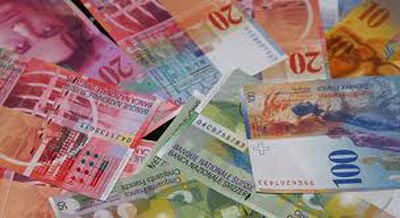
 LONDON: The Swiss franc strengthened past 1.10 to the euro for the first time in more than a month on Tuesday with some dealers citing speculation of a boost from a Polish mortgage conversion scheme and pressure on Swiss officials to intervene less.
A council advising Polish President Andrzej Duda on tackling the problems of many households in repaying now-expensive franc loans is due to announce fresh proposals at 1500 GMT.
Some dealers said expectations that might spur large scale conversions of some of the outstanding 148 billion zlotys ($37.7 billion) in loans may have supported the franc in morning trade.
"It may be related to the Polish mortgage loan announcement," said John Hardy, head of currency strategy at Saxo Bank in London.
"But it is market talk and liquidity is very thin in the zloty." Others put the move down chiefly to flows into the franc ahead of next week's meeting of the Swiss National Bank.
The Swiss currency, whose strength over the past five years has driven domestic interest rates deep into negative territory, has also been benefitting from capital seeking a safe haven from the risks around next month's Brexit referendum.
"People do not also exclude the risk of the Brexit event happening. This is driving flows into Switzerland at the moment," said Manuel Oliveri, a strategist with Credit Agricole in London.
"That does not mean I am ruling the Polish event out as a factor but I have not heard it as a mover this morning."
Data on Tuesday also showed the SNB's foreign exchange reserves rising, often seen as a sign that the bank is selling francs to buy foreign currencies and keep a lid on its value, although valuation effects make it difficult to quantify such moves.
"The last thing the SNB wants is a sharp strengthening of the franc, which would threaten Swiss exports and also push inflation lower again," said Georgette Boele, a market strategist with Dutch bank ABN Amro.
"These are the important reasons for the Swiss National Bank to continue intervening in currency markets and to keep monetary policy loose."

























Comments
Comments are closed for this article.