



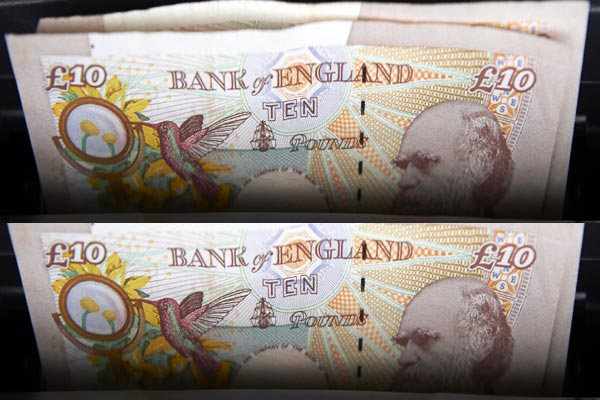
 LONDON: Sterling fell to a one-week low against the euro in volatile trading on Thursday, retreating from a one-month high hit earlier in the day, after European Central Bank chief Mario Draghi said more interest rate cuts were unlikely.
The euro rose 0.5 percent against the pound to 77.97 pence after the ECB chief's comments offset earlier measures that included rate cuts and further asset purchases, all of which were more than markets expected. The euro had hit a one-month low 76.53 pence after those measures were announced.
"Euro has turned a complete circle," said Andy Scott, economist at HiFX. "Having fallen by 1.5 percent to a low of the day against the pound, following the much more aggressive easing by the ECB, the euro has...reversed course."
Hedge funds and speculators had been wary about making huge bets against the euro, having been burnt in December when ECB's easing measures fell well short of market expectations. The euro rose almost 3 percent against the pound on Dec. 3 when the ECB's easing measures disappointed.
Against the dollar, sterling was flat at $1.4225. While the currency has bounced from 7-year lows of $1.3876 struck in late February, it has failed to rise past $1.43 with investors cautious about buying it in a big way.
On Thursday, Prime Minister David Cameron warned a British exit from the European Union would put pressure on sterling.
His words come a day after Buckingham Palace dominated domestic media by saying it had made an official complaint to Britain's press watchdog over a report in tabloid newspaper The Sun headlined "Queen backs Brexit". The palace said the monarch remains politically neutral.
British voters will decide in a referendum on June 23 whether the country stays in the EU or leaves. The latest YouGov polls show those wanting to stay in the EU are gaining ground, while bookmakers see a one-in-three chance of Britain exiting the bloc.
Investors worry that a 'Brexit' could drag down growth, push back UK rate hike expectations and also threaten the huge foreign investment flows Britain needs to balance its current account deficit, one of the biggest in the developed world at around 4 percent of output.
Bank of England Governor Mark Carney this week pointed, very cautiously, to what he saw as the economic risks of Brexit.
"While we believe the risk of an actual EU exit is not large, we acknowledge that the uncertainty surrounding the vote might negatively affect business confidence, in turn delaying private investments in the country," said Monica Defend, head of global asset allocation research at Pioneer Investments.


























Comments
Comments are closed for this article.