



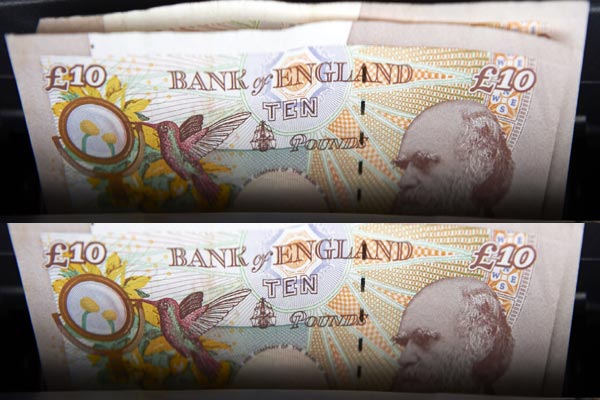
 LONDON: Sterling gained against the euro and traded at its highest in almost three weeks against the dollar on Thursday ahead of a Bank of England statement that some are looking to for a more bullish tone on the timeline for interest rate hikes.
The broad picture of a UK economy growing strongly but generating little movement in headline inflation has not changed since the bank's inflation report in November.
But with the Federal Reserve widely expected to raise official rates for the first time in almost a decade next week and the pound a touch weaker, there has been speculation that UK officials could afford to sound slightly more hawkish.
Against that there is the turbulence of the past week's brutal sell-off in oil and other commodities, and concerns over the national debate next year on whether to leave the European Union. "There is certainly talk in the market that the bank could take a more hawkish tone," said Tobias Davis, currency hedging manager with Western Union in London.
"Governor Carney did say previously that the direction on rates would become clearer at the turn of the year. He backed off that last month, but given his variable rhetoric, we may see some movement today." By 0930 GMT, the pound was half a percent stronger on the day against the euro at 72.26 pence.
It was flat at $1.5175, having hit $1.5197, its highest since Nov. 22.
On a trade-weighted basis, sterling has shed around 2 percent since the Bank flagged concerns about external developments weighing on the growth outlook last month.
A Reuters poll published on Wednesday showed economists expect the first rate increase in the second quarter of 2016, riding solid growth through to 2017.
Market pricing still puts a rise later in the year. Societe Generale and Canada's RBC Capital Markets have both recommended selling sterling in the past week, the French bank predicting the pound may fall as low as $1.30 if voters vote in a referendum to leave the EU.
"While I believe the economy is in a position to withstand a rate hike, I can understand why the central bank may be reluctant given the number of possible risks next year," said Craig Erlam, senior market analyst with retail currency broker Oanda.
He pointed to lower global growth, the pound's broad strength over the past year against the euro and the vote on Brexit, due by the end of 2017 but expected by many in the market next year.
"These are all significant headwinds for the economy, and to raise interest rates in the middle of it all could be quite risky. If the economy manages to ride this out, it will be far better placed for the beginning of a tightening cycle."


























Comments
Comments are closed for this article.