



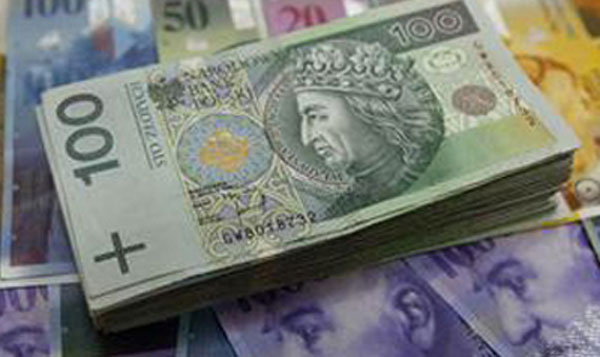
 BUDAPEST/WARSAW: The Czech crown held steady on Wednesday despite some weakening among other central European currencies, keeping up pressure on the central bank's cap near 27 against the euro.
Several central bank board members have reiterated that the bank would keep the policy in place for some time, likely until the tail end of 2016.
The bank has bought billions of euros in the market in recent months to keep the crown weaker than the ceiling.
The crown has stayed at the intervention levels even though other Central European currencies came under pressure after monetary loosening by the European Central Bank last week did not go as far as expected.
Healthy Czech output data this year is adding to the appreciation pressure.
However, figures released on Wednesday showing that annual inflation was a lower-than-expected 0.1 percent in November underpinned the central bank's arguments for keeping the cap.
With Czech market interest rates in the negative, the crown is a funding currency, with similar "safe haven" status to the Swiss franc.
The franc surged in January when the Swiss central bank abandoned its own cap and some investors believe that the same can happen to the crown when the Czechs exit the weak crown regime.
Czech Central Bank Governor Miroslav Singer was quoted as saying on Wednesday that the central bank would not let the crown firm sharply when it exits the forex intervention regime.
"We are not convinced, especially as we are still missing details of how the exit should be conducted technically by the Czech regulator," Raiffeisen bank said in a note.
The crown had eased only marginally by 0938 GMT, trading at 27.022 against the euro.
Other Central European currencies were mostly weakening even though the pressure from disappointment over the ECB's meeting last week was easing.
The zloty touched a new 11-month low against the euro in early trade, but at 4.343 it was only a touch weaker than on Tuesday.
Some banks like Pekao and Bank Millennium see a risk of further weakening towards 4.40 per euro.
Poland's parliament is due to discuss new spending rules and a cut in the retirement age on Wednesday and that is a key risk, BZ WBK said in a note.
"We see a risk of (zloty) weakening if it turns out that these changes could be introduced at a quick pace," it said.
In Romania, where the leu eased 0.1 percent to 4.487 against the euro, investors will watch the weekly meeting of the new "technocrat" government, which may shed more light on 2016 budget plans.
"The space for weakening is limited, as we believe the central bank would prevent the leu from consolidating above 4.50," ING said in a note.




















Comments
Comments are closed for this article.