



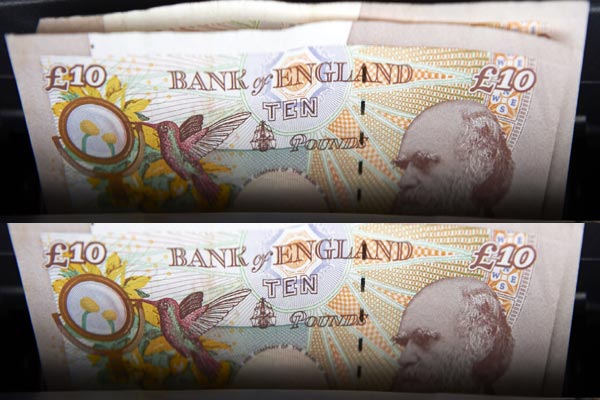
 LONDON: Sterling skidded by one percent against the dollar on Wednesday to hit its weakest since April as upbeat U.S. data strengthened the view that the Federal Reserve will raise U.S. interest rates later this month.
The pound was also hurt by a survey of purchasing managers in the construction sector that came in almost 3 full points below market expectations.
The poor numbers followed a similar miss on the equivalent manufacturing survey on Tuesday and added to a sense that the British economy is struggling to deliver the sort of sustained demand pressure that will prompt the Bank of England to raise interest rates.
In contrast, U.S. data showed private employers boosted hiring in November, signalling job growth is probably strong enough to support the first Federal Reserve interest rate hike in nearly a decade when policymakers meet on Dec. 16.
Sterling fell to a 7-1/2-month low of $1.4936 after the data, while also edging down 0.3 percent against the euro, to 70.75 pence.
"Mostly I think this is a dollar story, in that cable (sterling/dollar) is coming off hard alongside euro/dollar, leaving euro/sterling thrashing around a bit but not with any real direction," said RBC Capital Markets currency strategist Adam Cole.
The European Central Bank meets on Thursday and is expected to loosen monetary policy still further, with investors expecting a further cut of the deposit rate and an expansion of the ECB's 1 trillion euro asset-purchase programme.
Though the BoE's next move is expected to be in the opposite direction, in the form of an interest rate hike, money markets have pushed expectations for that far into next year.
But Bill O'Neill, the head of the UK investment office at UBS Wealth Management, predicts the BoE will make its first move by the middle of next year.
"If there is any slippage in cable by the time the UK begins to join the normalisation party next year, then sterling may bounce," he told a press briefing on Tuesday.
In the meantime, a number of major banks are more bearish. Morgan Stanley this week called for a fall to $1.40 over the next year, although others say $1.50 still looks like a level at which many firms and investors instinctively want to buy the pound.

























Comments
Comments are closed for this article.