



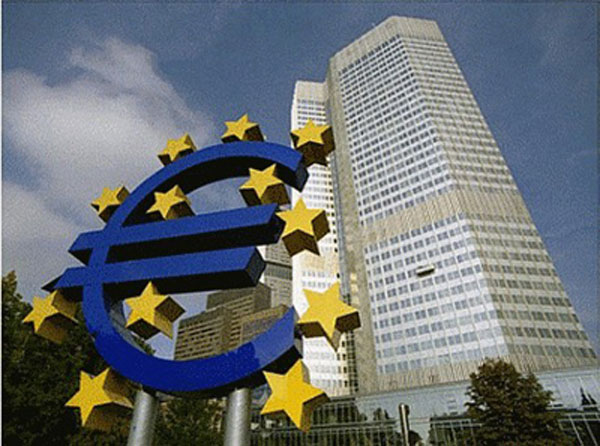
 BUDAPEST/WARSAW: Central European currencies and equities mostly eased as the euro's weakness against the dollar makes investors cautious before the release of detailed third-quarter US economic output data later on Tuesday.
Close ties with Europe's biggest economies link the region's currencies to the euro and the latter's movements against the greenback influence risk appetite in regional markets.
Interest rate hikes by the Federal Reserve can make the region's assets relatively less attractive, but the prospect of stimulus measures from the European Central Bank (ECB) buoys them.
The region's main currencies, the Czech crown, the forint, the leu and the zloty, eased about 0.1 percent against the euro by 0918 GMT.
The forint hovered near 14-year lows and the zloty near 11-year lows to the dollar even though pressure on the euro eased, with Germany's Ifo business climate index rising sharply in November.
Third-quarter German economic output data showed continuing weakness in exports, but private consumption and spending on refugees more than compensated for it.
Investors active in Central Europe are now waiting for US output data due at 1330 GMT. They focus on the euro/dollar even though the pro-growth stance Poland's new government should help the zloty, said Piotr Poplawski, BGZ BNP Paribas analyst in Warsaw.
"In the mid-term ECB should support a stronger zloty, as it is under strong pressure to ease policy in order to boost growth and inflation, but I am not sure if we manage to break through 4.20 per euro," he added.
The zloty traded at 4.257 versus the euro. Polish bond prices rebounded, tracking European peers, with the 10-year paper trading at a yield of 2.69 percent, down 4 basis points.
The bluechip index of the Warsaw bourse, however, also joined the European trend and eased 0.7 percent, led by the shares of Pekao Bank which shed 1.5 percent.
Bank stocks in Warsaw extended the losses posted on Monday after worries that Polish banks will have to pay up for bankrupt
SK Bank's state-guaranteed deposits as their tax burdens are also expected to rise under the new government.
Hungarian government bonds and the forint have been under some pressure since Fitch dashed hopes on Friday for a rating upgrade to Hungary. Yields rose by a few basis points on Tuesday.
One Budapest-based fixed income trader said dollar investors had probably hedged their currency risks in Hungary.
"I cannot see flows that could be linked to that (the forint's weakening against the dollar)," he said.

























Comments
Comments are closed for this article.