


Syria economy hit by demos but not collapsed: experts

 DAMASCUS: The Syrian economy, hit hard by five months of anti-government protests, could survive unrest and sanctions into next year but experts and officials warn of a sharp deterioration afterwards.
The protests, which have rocked much of the country since mid-March, have dramatically slowed economic activity, with analysts predicting negative economic growth in 2011 as a result of a decline in tourism and investment.
"During the first three months of the revolt, everything stopped because consumers were stunned," said Abdul Ghani Attar, vice-president of Attar Group, a Syrian conglomerate with investments in hotels, finance, pharmaceuticals and office equipment.
"Since June, economic activity has resumed, but is down about 40 percent from a year ago."
The 32-year-old continued: "For the moment, the private sector, which represents 70 percent of GDP, has survived, but if the situation does not improve next year, the economy will really suffer. There is a risk of layoffs."
Even now, Syria's economic indicators paint a grim picture.
The Washington-based International Institute of Finance predicts the country's economy will contract by three percent, and tourism, which accounts for 12 percent of GDP and 11 percent of employment, is sharply down.
The overall number of investment projects, meanwhile, are down 47.84 percent in the first half of 2011 compared to the same period of 2010, according to official figures.
To make matters worse, the population are now only buying the bare necessities because of a fear of the unknown, according to Naji Shawi, who heads the Shawi Group.
The turnover of the Shawi Group, which is involved in food, pharmaceuticals, cleaning products and finance, is down between five and 10 percent compared to last year, he said.
"Until now, the business sector is surviving, but if this crisis continues for more than six months, there will be problems," he said.
Syria's main stock market has plunged 40 percent since mid-March and consumption is markedly lower, with clothing and electrical stores in Damascus lying bare.
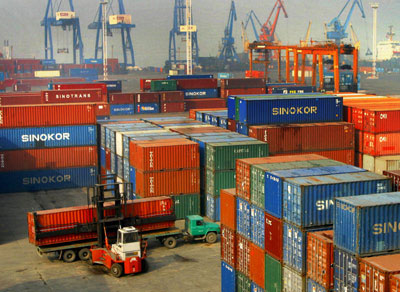
The country imported just 2,000 cars in May, against 20,000 in March, and overall imports have halved compared to last year, according to a European diplomat, who spoke on condition of anonymity.
By contrast, building materials are booming because, with police occupied by widespread protests, unsupervised construction is on the rise. Street vendors are also doing well for similar reasons.
For the moment, the economic decline has not spread to the currency, as the Syrian pound is down just eight percent against the US dollar since mid-March.
Copyright AFP (Agence France-Presse), 2011










Comments
Comments are closed for this article.