


Grains Week Ahead-Crop tour, Bernanke may hold sway

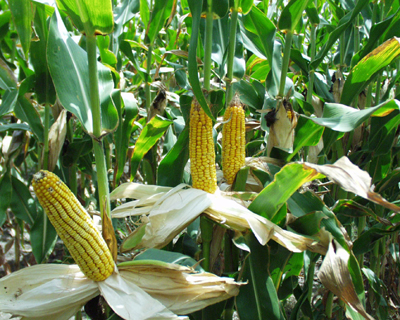 CHICAGO: Fresh from the field, accounts of yields for the corn and soybean crops in the US Midwest this week are expected to hold sway over prices.
The annual "crop tour" kicks off on Monday even as chatter of poor corn yields due to weather damage is picking up and helping to support prices at the Chicago Board of Trade.
The tour, whose daily updates end with forecasts for corn and soybean yields and production after the market closes on Friday, will compete for attention with escalating fears of the United States slipping into another recession.
The possibility of a double-dip recession roiled the stock market, which was also pummeled by worries that Europe's spiraling debt could trigger a funding crisis for its banks.
Grains have stood up relatively well during the market turmoil of the past few weeks, with prices hovering near recent highs amid support from tight stocks and production woes.
There could be new direction this week, not just for grains but for the economy at large, when Federal Reserve Chairman Ben Bernanke speaks at the annual Kansas City Federal Reserve conference in Jackson Hole, Wyoming.
It was Bernanke's speech at the same location a year ago that signaled the Federal Reserve's $600 billion bond-buying exercise, or QE2, that helped to rally commodities.
QE2 ended in June, but with the divide between Democrats and Republicans in Congress, many analysts think some type of action by the Fed was needed to reinvigorate the economy, which grew at an anemic pace in the first half.
"Any chance of a fiscal policy is absolutely dead because of this conflict in Washington. QE3 is about the only thing they can do," said a senior trader with a large brokerage.
"Without it (QE3), we'll be in a hard recession and it could be a while before the economy recovers," he added.
CROPS ON THE RADAR
Analysts said markets will be watching reports from the crop tour this week to verify if anecdotal accounts of poor corn yields match up with estimates from the fields.
The crops suffered from above-normal temperatures in the Midwest in July after being inundated by rains in the spring.
The US Department of Agriculture underscored the damage to crops by dropping its estimate of corn yield to 153 bushels per acre from 155.6 in its Aug. 11 supply-demand report.
The department also downgraded the soybean crop -- which is in the process of setting yields this month -- by reducing the yield to 41.4 bushels per acre from 42.8 bushels.
Analysts said that smaller crops in the United States, the world's top exporter of corn and soybeans, coupled with investor interest in grains as a store of value could help to support corn, soybeans and wheat this week.
"By buying grains, they own a physical commodity that is seen as a hedge against inflation," said grains analyst Karl Setzer of MaxYield Cooperative.
He also said there were anecdotal accounts that the corn crop in some areas in the western Midwest were maturing too rapidly due to dry weather, adding that this would result in smaller ears of corn from those places.
Grains analyst Robert Bresnahan of Trilateral Inc said investors were generally averse to risky assets due to the turmoil in financial markets and uncertainty in the way ahead to remedy the economic ills in the United States and Europe.
"There are fewer people in the market because the volatility. Not too many people can tolerate this volatility."
Bresnahan said investors are closely monitoring economic growth in China, the world's top buyer of soybeans that has resumed importing US corn after a long hiatus.
"Everyone is waiting for China. At some point, China is going to have an issue," he said, referring to a possible slowdown in China's economic growth.
Copyright Reuters, 2011



















Comments
Comments are closed for this article.