



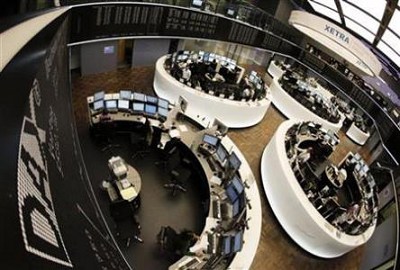
 LONDON: European shares fell to their lowest level in more than two months on Thursday, with a stronger euro and a global bond rout denting the appeal of shares.
By 1029 GMT, the pan-European FTSEurofirst 300 index was down 1.3 percent at 1,526.91 points after falling to its lowest since late February. Britain's FTSE 100 index fell 1.6 percent on the day of an election that could yield a weak government, propel it towards a vote on EU membership and foster Scottish secession.
This week, a combination of disappointing economic data in the United States and receding inflation fears due to a rebound in oil prices have raised the spectre of an early tightening in US monetary policy, triggering sell-offs in bonds and shares.
At the same time, a euro bounce against the dollar hit expectations for export-oriented European companies. Those hopes had surged after the European Central Bank launched an aggressive asset-purchase (QE) programme in March.
The euro hit a two-month high, still pulling away from March's 12-year trough.
"The (weaker) dollar ... is definitely a burdening factor for European equities as the correlation between the US currency and European equities is extremely high," UniCredit strategist Christian Stocker said.
"From a sectoral point of view, this is important and definitely negative for cyclical sectors such as automobiles and industrials."
The sell-off was also exacerbated by heavy investor positioning in euro zone equities, often hedged with short positions on the euro, since the ECB began its QE programme.
"Euro strength is worrying because it is harming most positions," KBC Asset Management senior strategist Ronny Claeys said.
Among individual sharp movers, Metro fell 5.5 percent after German investment group Haniel said it had successfully placed 16.25 million shares in the retailer.
Morrisons slipped 6.8 percent to be the biggest faller in the FTSE 100 after Britain's No. 4 grocer posted a further deterioration in underlying sales, underlining the tough turnaround task facing its new boss.
"The challenge ahead for the new chief executive is significant.
The improving trend in like-for-like sales over recent quarters has ended, with the latest industry data reporting ongoing growth for the discounters - Aldi and Lidl,"
Hargreaves Lansdown equity analyst Keith Bowman said.
Swiss staffing firm Adecco fell 6.4 percent, making it the top decliner in the FTSEurofirst 300 index, after both its chief executive and chief financial officer decided to leave, casting a cloud over its future as it posted record first-quarter results.
Germany's Beiersdorf, however, bucked the trend and rose 2.4 percent after reporting a bigger-than-expected rise in first-quarter core profit, helped by demand for its products in Eastern Europe.
HeidelbergCement gained 1.1 percent following a rise in core first-quarter earnings of 29 percent on the back of a construction industry recovery in North America and Britain.

























Comments
Comments are closed for this article.