



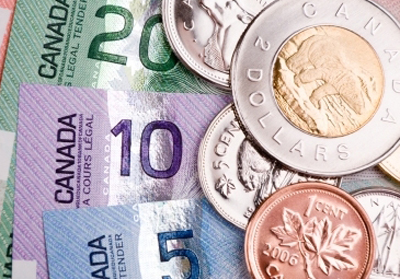
 TORONTO: The Canadian dollar rallied against the greenback for a third straight session on Thursday, breaking key technical levels for the first time since January, fueled by the Bank of Canada's more optimistic view of the economy in the second half of the year.
A broadly softer greenback, and conflict in Yemen that pushed the price of crude, an important Canadian export, higher, added to the loonie's strength.
"It's going through all the little lines in the sand we've put out there ... here we are at C$1.21 and change," said Don Mikolich, executive director, foreign exchange sales at CIBC World Markets.
"I don't think the (Bank of Canada's) message was meant to be a bullish one, but certainly less dovish and the market's really taken it forward. (US) oil prices here at $56 aren't hurting ... We really had no other news today, so it's still the pure reaction to the Bank of Canada."
On Wednesday, the loonie powered to its strongest against the US dollar since the Bank of Canada's surprise interest rate cut in January.
The Canadian dollar finished at C$1.2181 to the greenback, or 82.10 US cents, more than a cent stronger than the Bank of Canada's official close of C$1.2300, or 81.30 US cents, on Wednesday. It has jumped some 3.4 percent, or more than 4 Canadian cents since Monday.
The currency, which had been trapped in a range of around C$1.2350 to C$1.2850 since the January cut, traded between C$1.2143 and C$1.2328 on Thursday.
The US dollar tumbled against a basket of major currencies after weak US data and comments from the Federal Reserve suggested a much anticipated interest rate hike will likely come later in the year.
US and Canadian inflation figures for March and Canadian retail sales for February are among the key economic data due at 8:30 a.m. EDT on Friday. Some forecasters say the CPI could take a back seat to retail sales in Canada, with inflation expectations already addressed by Wednesday's central bank statement on rates and its monetary policy report.
Canadian government bond prices were lower across the maturity curve with the two-year price down 4.5 Canadian cents to yield 0.580 percent and the benchmark 10-year sliding 30 Canadian cents to yield 1.375 percent.
The Canada-US two-year bond spread was 9.6 basis points, while the 10-year spread was -52.


























Comments
Comments are closed for this article.