



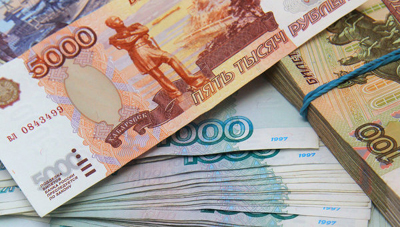
 MOSCOW: Russia's rouble gained ground on Thursday, helped by weaker demand for foreign currency and a retreat in the U.S. dollar on global markets, while a jump in the central bank's forex reserves boosted market sentiment.
At 1515 GMT, the rouble was around 1.6 percent stronger against the dollar at 56.68 and was around 0.4 percent up on the euro at 61.73.
"At the moment there are no reasons to bet against the rouble, the market is looking for fair values for the current situation," said Igor Akinshin, a forex trader at Alfa Bank.
"At the end of last year, foreign currency was clearly overvalued and exchange rates excessive. Now no one has any need for foreign currency," he said.
Central bank data on Thursday showed that Russia's reserves jumped by $7.9 billion to $360.8 billion in the week to March 27 due to swings in the value of its currency holdings and to reduced demand for dollars from Russian banks.
Meanwhile, the dollar dropped around 0.7 percent against a basket of major currencies.
The rouble strengthened even though Brent crude oil, a key driver for all Russian assets, was over 3 percent down on the day at around $55.2 a barrel.
Market participants have their attention pinned on talks over a nuclear pact between Iran and global powers. A deal could lead to an easing of a sanctions regime on Iran that could see Tehran ramp up oil exports, weighing on crude prices.
Trading volumes in Moscow were thin ahead of an extended Easter holiday weekend on which many Western markets will be closed and as the market awaited U.S. payrolls data on Friday.
Russian shares also rose on Thursday, with the dollar-denominated RTS index up 2.6 percent to 934 points, while its rouble-based peer MICEX traded 1.1 percent higher at 1,680 points.
Shares in the Moscow Exchange rose around 7 percent after the central bank said it did not plan to sell out of the exchange this year given recent geopolitical developments.
Alexander Kostyukov, analyst at Veles Kapital, said Moscow Exchange shares were rising because the central bank selling its shares on the market would have depressed the exchange's share price.




















Comments
Comments are closed for this article.