


Shipping containers stuck in Karachi on Afghan-Pakistan trade dispute

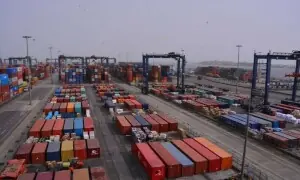
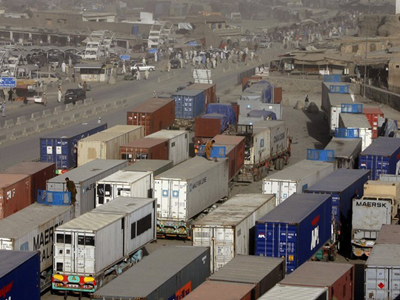 ISLAMABAD: Nearly 2,500 shipping containers bound for war-ravaged Afghanistan are stuck at Pakistan's Karachi port, officials said on Wednesday, in a wrangle over financial guarantees for the goods as part of a trade transit deal brokered by the United States.
The transit trade deal came into force on June 12 to help landlocked Afghanistan, which gets nearly 34 percent of imports through Pakistan with the rest coming via Iran and Tajikistan.
Pakistan wants financial guarantees from Afghan importers to ensure the consignments reach Afghanistan. Pakistani traders have long complained that goods destined for Afghanistan under earlier transit trade deals were routinely smuggled back into the country and hurt the domestic market.
The Pakistan Transit Trade Agreement (APTTA) was signed last year, but importers have been reluctant to pay one-time non-refundable fee to Pakistani banks and insurance companies.
"On the instructions from the prime minister, we have deferred the financial securities clause in APTTA for 60 days, effective from July 8, to help flow of the Afghan transit goods," a commerce ministry official said.
"But the problem will recur after the expiry of 60 days if the issue of financial securities on Afghan goods is not resolved," said the official on the condition of anonymity as he was not authorised to speak with media.
Pakistani clearing agents at the port said that a few dozens containers had been released after the government relaxed the provision, but they were stuck at the Torkham border at the Khyber Pass because of procedural problems.
The APTTA has replaced the 1965 bilateral transit accord, and also includes a new provision that allows Afghan trucks to transport exports to India via Pakistan through the sensitive Wagah land route in the divided Punjab province.
The financial guarantees, equal to about 2.5 percent of the duties and taxes levied on imported items, raise transit costs enough to make smuggling unattractive. The securities could be in cash or guarantees from banks or insurance companies carrying a local "AAA" rating.
"Afghan traders had agreed to secure insurance guarantees as the cheapest, but they are now unwilling to pay one-time non-refundable premium to these companies," said a second commerce ministry official, familiar with the transit deal.
"Now they say that there should be financial securities only for sensitive goods, or items prone to smuggling."
The two officials, however, said the Pakistan government was engaged in consultations with the Afghan government to devise a smooth working procedure.
Copyright Reuters, 2011



















Comments
Comments are closed for this article.