


BPA to hike power rates around 7.8pc

 NEW YORK: The US Pacific Northwest's Bonneville Power Administration (BPA) adopted a 7.8 percent average wholesale power rate hike that takes effect Oct.1.
In a release Tuesday, BPA, the US-owned power company that operates the federal Columbia River hydropower dams, said the new rates will support needed improvements to the region's 31 federal dams and the Columbia nuclear plant.
Despite any rate increase, power costs in the Pacific Northwest are expected to remain among the lowest in the nation because of that low cost hydropower.
The average retail price of power is 6.6 cents per kilowatt hour in Washington State and 7.4 cents in Oregon, versus a national average of 9.8 cents for the nation, according to federal data.
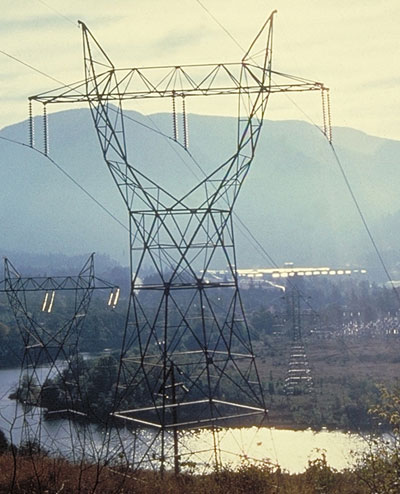
BPA, which also manages 75 percent of the power transmission lines in the Northwest, said transmission rates will hold steady or decrease under this rate plan.
And for wind generators, who have fought BPA this year over having their output curtailed to allow more hydropower to reach the power lines, BPA said it would slightly reduce the rates to integrate wind farms.
BPA said it was able to hold down its 2012-2013 wholesale power rate increase by relying more heavily borrowings from the US Treasury, instead of replenishing its reserves, among other things.
In addition, BPA announced on Tuesday it settled a long-standing residential exchange program dispute over how benefits from the federal hydro system are divided between public and investor-owned utilities.
As part of that settlement, BPA said it would distribute about $3.3 billion to investor-owned utilities over the 17-year term of the settlement, beginning at $182.1 million in fiscal 2012 and increasing to $286.1 million by fiscal 2028.
Investor owned utilities in the area include units of Avista, Berkshire Hathaway and Portland General.
For consumer owned utilities, BPA said it will distribute about $612 million, paid at $76.5 million per year from fiscal 2012 to fiscal 2019.
"We need to make careful investments to protect the substantial value of the Northwest power system, but we also need to keep rates as low as possible, especially since the economy is still struggling," said Steve Wright, BPA administrator.
"This rate strikes a balance that allows us to replace and refurbish aging equipment at the dams and Columbia Generating Station and maintains the momentum of our efforts to protect endangered salmon."
BPA said it will reduce the rate for integrating wind onto its transmission grid by 4.7 percent.
BPA said the cost of integrating more wind is increasing but the reduction was possible because some additional geographic diversity of the wind projects.
There are more than 3,500 megawatts of wind connected to the BPA transmission system. By Sept. 30, 2013, BPA said that amount is expected to grow to about 5,500 MW.
One megawatt can power about 1,000 homes.
BPA anticipates having the capability to integrate the projected wind coming onto the system through 2013, but noted it was "rapidly running out of system flexibility."
To deal with the growing wind power resources, BPA said it has developed mechanisms to acquire more balancing reserves if the amount of wind outpaces its ability to integrate it.
If the need for more reserves arises, BPA said it established mechanisms to pass those costs on to the customers using the service and said it was providing options for wind generators to obtain additional service or lower costs by committing to adjust their schedules every half hour.
Copyright Reuters, 2011





















Comments
Comments are closed for this article.