



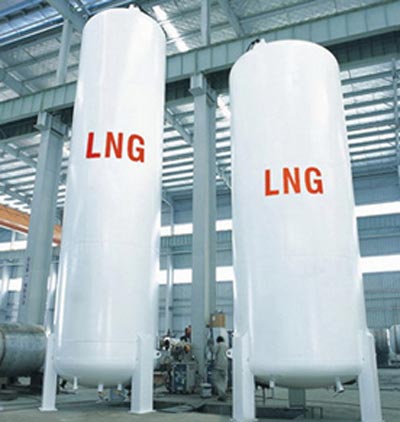
 SINGAPORE: Asian liquefied natural gas (LNG) prices are expected to fall by up to 30 percent in 2015, according to a survey of analysts and consultants, as the market enters a period of oversupply and the impact of lower oil prices kicks in.
The explosive growth in LNG consumption seen in recent years has stalled on cooling Asian economies and with a resumption of nuclear energy and a greater use of coal in some markets.
At the same time new LNG production has been coming on stream, meaning tight supply conditions that had been expected to last until the end of the decade are ending more quickly.
"Demand is a lot weaker than we anticipated just six months ago," said Gavin Thompson, head of Asia-Pacific gas and power at consultancy Wood Mackenzie.
Asian spot LNG prices have more than halved since the start of the year to below $10 per million British thermal units (mmBtu).
Average import prices into Japan, the world's top buyer, are forecast to fall to about $11 per mmBtu next year, down from an estimated $15.50 this year and $16.45 in 2013, if Brent crude averages around $75 a barrel, according to David Hewitt, co-head of global oil and gas equity research at Credit Suisse.
If Brent trades at $85 next year, the price could be $12.60 per mmBtu, Hewitt said. Japanese prices are a benchmark for LNG in Asia, a region which accounts for about 70 percent of global trade.
Gas prices will also respond to falling oil prices, which have fallen 40 percent since June, because most gas prices in the region are indexed to oil.
Others also changed their outlook. Consultancy Energy Aspects cut its forecast for 2015 spot prices by $1.70 to $12.40 per mmBtu.
LAST HURRAH?
Asian demand shot up following the 2011 Fukushima disaster as nuclear reactors were idled in Japan, while LNG costs under long-term contracts was pushed up by oil prices.
But markets are changing. In South Korea, where some reactors were shut due to a scandal over fake certificates, most have restarted, displacing LNG, while coal-fired power plants are also running at high capacity.
In Japan, a depressed economy is also limiting demand, albeit at a high level, while weak demand is now also hitting China as slower economic growth forces buyers to re-sell imports on the global market.
LNG prices are also unlikely to top cheap low sulphur heavy oil products that Japanese utilities can use instead of gas.
If Brent trades at $70 a barrel, the price of low sulphur oil will cap LNG spot prices at $10.50 per mmBtu, Wood Mackenzie's Thompson said.
With Asia's energy demand at its highest during the northern hemisphere's winter months, and long-term contracts linked to oil having a six-nine month time lag before being priced in, the recent oil price drop will only kick in around the second quarter of 2015. "The first quarter of 2015 could be the last hurrah for LNG prices for a while. If Northeast Asia is mild again, then the ramp up of prices could be really very subdued and will lead us into a couple of years of oversupply," said Energy Aspects' Trevor Sikorski.
Credit Suisse said around 5 million tonnes of supply will come to market next year from Australia, 14 million tonnes less than initially expected, due to delays.
"Buyers are relatively comfortable with delays and slower ramp-ups, because they don't really want to take that gas now," said Thompson.




















Comments
Comments are closed for this article.