



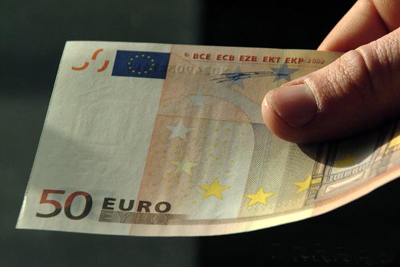
 LONDON: The euro fell more than half a cent against the dollar on Tuesday after Reuters reported the European Central Bank was looking at buying corporate bonds as soon as December in its efforts to revive the euro zone economy.
The move, if realised, would widen out the private-sector asset-buying programme the ECB began on Monday, adding to the number of new euros the bank can put into circulation without politically controversial purchases of government bonds.
It should also suppress yields on bonds held in euros in general, although German government bond yields rose after the story was published, reflecting a repricing of expectations for inflation and a declining appetite for low-risk assets.
"It increases the potential scale of the purchases the ECB will be able to make if they extend out into the corporate bond market," said Lee Hardman, a strategist with Bank of Tokyo-Mitsubishi in London.
"That reinforces market confidence in (ECB chief) Mr Draghi's pledge to increase the bank's balance sheet by a significant amount. The ECB is still under pressure to do more."
The diverging directions of monetary policy between mainland Europe and the United States has been the central argument supporting a run higher for the dollar since May.
Most major banks have lined themselves up behind a radical shift in the dollar's value over the next year or two that should take it at least another 10 percent higher and potentially close to parity with the single currency.
But that move has stalled amid broader doubts about the strength of global growth and likelihood that U.S. policymakers will push ahead with rises in interest rates next year.
The euro, earlier up on the day against the dollar, fell to a day's low of $1.27575 after publication of the story. It then settled to trade at $1.2767, down a quarter of a percentage point on the day.
CONFLICTING SIGNS
Asian and early European trade in the major currencies was dominated by data from China, the Australian dollar rising as much as half a percent after growth figures from the world's second-largest economy slightly exceeded expectations.
The Aussie, often seen as a liquid proxy of Chinese growth prospects given Australia's large trade exposure to China, rose 0.2 percent on the day to $0.8804.
Chinese industrial output figures also beat forecasts but did little to settle the broader concerns over global growth that have dominated markets this month. The ECB story had more effect, driving European shares more than 1 percent higher on the day and putting Wall Street on course for a higher open.
The improved appetite for risk also pulled the yen back, after the Japanese currency, a traditional destination for capital in times of global stress, had gained half a percent against the dollar overnight.
"The market looks to be just chopping around a bit at the moment," said Graham Davidson, a spot currency trader with National Australia Bank in London.
"Until we get some more data that make clear whether these concerns about growth are just a blip or a sign of a more concerted slowdown, that's going to be the pattern."
He said the Aussie and South African rand had both benefited from the Chinese numbers, which showed the economy slowing to 7.3 percent annual growth. That was its slowest pace since the global financial crisis but narrowly more than a consensus forecast of 7.2 percent.




















Comments
Comments are closed for this article.