


NA Speaker stresses for collaboration between SAARC nations

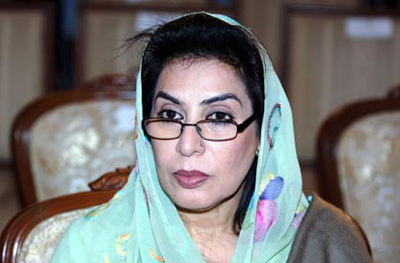 ISLAMABAD: Speaker National Assembly Dr. Fehmida Mirza has said that the South Asian Association for Regional Cooperation (SAARC) Nations should contemplate the creation of South Asian Parliament for sustainable peace and prosperity in the region.
She said that it would be the largest forum of legislators, commanding the trust of 1.7bn South Asians enabling our respective countries to negotiate sustainable solutions to our numerous bilateral and multilateral problems.
Dr. Fehmida Mirza said this in her keynote address at the working session of the 5th SAARC Speakers and Parliamentarians Summit being held in New Delhi, according to a message received from India on Sunday.
Dr. Fehmida Mirza said that the conception of SAARC parliament would infuse a new life into SAARC forum besides supporting, guiding and protecting the emerging democracies of the Region by becoming a vanguard of freedoms in South Asia.
She said that "we should collectively resolve to build peace, ignite prosperity and consolidate democracy by strengthening trust between our people and the Parliaments".
She said that South Asian region has seen enough bloodshed, wars and conflicts; therefore, the parliamentarians should jointly bring an end to our people's miseries by joining hands for a meaningful cooperation through experience-sharing, joint resource mobilization and strong networking.
She said that all SAARC Parliaments are confronted with identical challenges which bear the burden of more than half of the world's poor, mal-nourished, illiterate and disease-stricken people.
She said that unfortunately democracy could not be consolidated in all the SAARC due to deeply entrenched authoritarianism in our respective societies which never allowed the uninterrupted growth of a vibrant democratic culture.
She said that "at the turn of the century, however, our common struggle for freedom, democracy and justice again bore fruits and wave of democracy was finally sweeping across the SAARC region". She said that Pakistan, Bangladesh, Afghanistan, Nepal were witnessing the dawn of a new era of people's power.
Dr. Fehmida Mirza said that "as parliamentarians, we were duty-bound to address the threats and challenges for managing the consolidate democracy in our respective polities".
She that it is imperative for strengthening of democracy that cross sections of society are actively involved into the political arena through free and fair election, an independent and impartial judicial system which ensures speedy and inexpensive justice, a responsible executive which guarantees people's friendly public administration, a vibrant civil society and free media for overseeing and constructively analyzing the performance of all pillars of the State and above all a fully empowered, supreme and efficient Parliament, which is a true bastion of people's power.
She said that the Parliament's competence is now overwhelmingly marked by its ability to enact laws, to hold the Executive accountable for all its acts of omission and commission and to debate and address core issues of poverty eradication, unemployment, universal education, effective healthcare systems, environmental protection, energy crisis and gender mainstreaming.
She said that after the comeback of democracy in Pakistan in 2008 and the democratic forces pledged to protect and consolidate it by-building a strong parliament capable of delivering on decade's old promises.
She said that historic 18th Constitutional Amendment not only purged the sacred document of encroachments by the dictators, but also translated the long-cherished dreams of provincial autonomy into a beaming reality.
She said "the present Parliament of Pakistan has also earned a unique place in our national history by remaining a proactive forum in protecting the rights of the under-privileged classes, especially women, children and minorities".
She said that current National Assembly has passed 77 Bills during last 3-years out of which more than a dozen relate to women and children.
She further said that transparency and financial accountability remains at the centre-stage of public trust therefore, the appointment of the Leader of the Opposition as the Chairman of PAC is one such hallmark of our system, which has not only earned the Parliament the confidence of our people but which has also set a benchmark for many established democracies to follow.
The Parliament of Pakistan has not only a strong presence of more than 22 percent women legislators but also a vibrant forum in shape of Women's Parliamentary Caucus, which is the driving force behind social legislation.
Referring to the cooperation between SAARC nations, Dr. Fehmida Mirza said that in this spirit that Pakistan recently agreed to accord the "Most Favored Nation" status to India by replacing a ''positive trade list" with a "negative trade list".
This vital decision will open new vistas of enhanced commerce and trade in the entire South Asia. She was confident that both the countries would resolve all the outstanding issues through dialogue.
She said that the numerous success stories of SAARC region could be replicated in other countries to win over the trust of our respective people.
She said that the reduction of child mortality in Sri Lanka, the Maldives leading in universal education, Bangladesh's initiative of ensuring effective women's political empowerment and Nepal making important strides in that vital direction, were big achievements for adoption by other SAARC nations.
Copyright APP (Associated Press of Pakistan), 2011














Comments
Comments are closed for this article.