


Russia to pump more oil

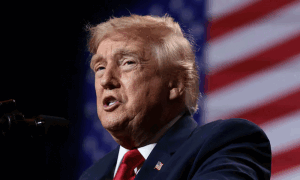
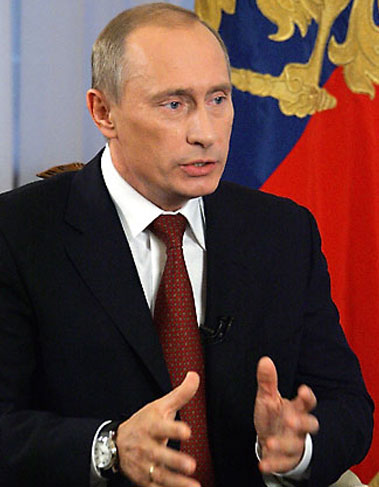 KIRISHI: Russia will cut its oil export duty to ward off stagnation in its Soviet-era production base, but Prime Minister Vladimir Putin's long-expected announcement was coupled with strong pressure on refiners to produce more fuel.
Russia is pumping at peak levels after an annual record of 505 million tonnes (just over 10 million barrels per day) last year, but older fields are getting tapped out and incentives are needed to stimulate production.
"Last year Russia became the world's top oil producer," Putin said. "This is exactly the level of crude which allows us to cover our own needs as well as export requirements. This year we expect 508-509 million tonnes."
Putin announced a long planned cut in the coefficient used to calculate the oil export duty to 60 percent "initially", down 5 points from the current level, to stimulate crude output.
But he suggested oil companies could lose access to export pipelines if they ramped up crude export at the expense of domestic refining.
Russia, the world's largest crude exporter, has faced acute gasoline shortages in recent months as refineries have proven unequipped to refine enough light oil products gasoline and diesel to supply the country's growing number of cars.
With a presidential election due in March next year and parliamentary elections in December, the government wants to ensure smooth supplies of refined fuels.
"Producers should have the responsibility to supply the domestic market (with oil products) in a proportional amount to the crude they pump," Putin told the meeting.
Russia's oil companies say the new export duty regime dubbed "60/66" as it cuts the crude duty to 60 percent, with oil product duties to be set at 66 percent of crude duty should be implemented as soon as possible so they can plan investments.
But disagreement over the details particularly the oil product export duty went to the very top.
Putin unexpectedly said fuel oil a heavy product that requires further processing by sophisticated refinery units into gasoline and diesel would be be charged at the same export rate as crude oil from 2015.
Fuel oil has long been subject to a low rate of export duty, which has in turn encouraged refiners to produce large volumes of the straight-run product for export as a crude oil surrogate.
Energy Minister Sergei Shmatko later said the proposal was, as expected, to equalise duty on exports of all oil products at 66 percent of the level charged on crude.
That, however, would imply an effective cut in duty on light products. Gasoline is currently subject to a prohibitive export tariff of 90 percent of the crude duty to stop outflows of gasoline, which were partly to blame for the fuel crisis.
"We have one type of duty which was introduced not long ago, on gasoline and straight run gasoline, which is 90 percent of the crude duty," Deputy Prime Minister Stanislav Voskresensky told.
Copyright Reuters, 2010



















Comments
Comments are closed for this article.