



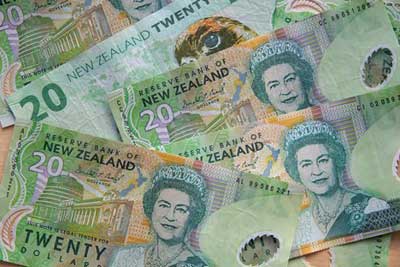
 WELLINGTON: Growing signs that the New Zealand dollar could be in for a fall may grant the Reserve Bank of New Zealand's wish for a softer currency without the need for intervention in the foreign exchange market that it threatened this week.
In a speech on Wednesday, RBNZ Governor Graeme Wheeler said the central bank could sell the "kiwi" dollar, which has soared to a post-float high against a currency basket, if economic fundamentals no longer justified its strength.
He also said that ongoing currency strength could slow the pace of the RBNZ's monetary tightening cycle, which would require markets to pare back their current pricing for future interest rate rises down the line.
The kiwi has fallen around 1 percent to $0.8670 since Wheeler's warnings, retreating from a 2-1/2-year high of $0.8779 hit on Tuesday. It was trading around $0.8658 on Thursday.
Signs of a cooling housing market and easing dairy prices indicate New Zealand's economic growth cycle is maturing, suggesting the kiwi will struggle to make further gains on domestic factors. Some market participants believe the currency may have hit its peak for the year.
"The market's got far too many hikes priced in there's certainly room for pricing to come out," said Tim Kelleher, head of institutional FX sales NZ at ASB Institutional in Auckland. Such a move could knock the kiwi to the lower end of the $0.8500-$0.8800 range the kiwi has treaded since March, he added.
Markets see an 81 percent chance that the RBNZ will raise its official rate by 25 basis points to 3.25 percent in June, and expect 85 basis points' worth of tightening in 12 months , but some banks have already cut their forecasts.
Also posing a risk for the kiwi is a build-up in speculator bets for more kiwi strength, which have been climbing steadily since February to hit their highest in a year.
An increase in these positions raises the risk of a sharp reversal on any signs that the love affair with the currency is fading, which could exacerbate any selling in the currency.
The kiwi has gained 5.2 percent against the US dollar so far this year, bolstered by expectations that its rate advantage will increase against other currencies as RBNZ takes the lead in raising rates.
But another driver of the kiwi's rally has been weakness in the US dollar, which has languished as investors seek more clarity on the health of the US economy to gauge when the Federal Reserve may begin to raise rates.
Gains in the kiwi have coincided with a slide in one-month implied options volatility, which fell to a near 1-1/2-year low around 7.0 percent late last month, as listlessness in the US dollar has reduced overall currency volatility.
While the kiwi tends to rally when volatility is low, it has a history of selling off when volatility increases, as it did a year ago after it scaled a historic high, and in mid-2012.
"Historically, NZD/USD is a risk instrument, so in times of heightened volatility the kiwi will fall," ANZ currency strategist Sam Tuck said. "We'd expect the resolution (of the current period of low volatility) to result in a weaker kiwi."
Market participants have downplayed the prospect of direct intervention, as it would run counter to RBNZ's monetary tightening cycle, which began in March.
The RBNZ is also haunted by its last direct foray into the FX market in June 2007, when it sold the currency only to see it march higher in the following days, a painful reminder of the central bank's limited firepower in the kiwi market, which sees daily turnover of about $100 billion.




















Comments
Comments are closed for this article.