


Japan consumer prices log first rise in 28 months

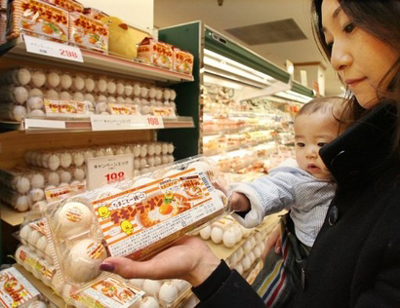 TOKYO: Japan's consumer inflation rose for the first time in 28 months in April, partly because the March 11 quake and tsunami and Arab political turmoil stoked higher fuel prices, data showed Friday. However, analysts said the small jump does not spell an end to the deflation that has for years stalked the economy in a country where an ageing and shrinking population has increasingly held onto their purse strings. Japan's core consumer price index, which excludes volatile fresh food prices, rose 0.6 percent in April from a year earlier, the first increase since December 2008, according to the internal affairs ministry. The rise, which was in line with market expectations, was due largely to higher costs for oil products. Unrest in Libya and the Middle East drove up global oil prices, while Japan's March catastrophe damaged oil refineries and disrupted distribution of gasoline, kerosene and other petroleum products. "It's too early to think that Japan is close to the end of deflation," an official at the ministry said as he briefed reporters on the data. He noted that the figures were also skewed by factors related to government education benefits. More than a year has passed since the subsidies were introduced, meaning they were no longer distorting year-on-year price changes. Yuichiro Nagai, economist at Barclays Capital, said "we still cannot say that Japan has broken out of deflation," arguing that another factor behind the April price rise was higher utility charges. Electricity and other utilities charges were hiked due to increased gas and oil prices since the Middle Eastern turmoil, he said. Nagai noted that foodstuff prices, excluding fresh food, also rose, as the cost of flour and other commodities increased and because of supply disruptions due to the March 11 disaster. Hideyuki Ishiguro, a strategist at Okasan Securities, said "the CPI uptick came mostly from higher materials costs being passed on to consumers, rather than an increase in demand." Higher prices for end-products may hurt consumer demand, he said. Japan has been hobbled for years by deflation, a general drop in prices that saps economic activity, cuts into corporate profits and encourages consumers to defer spending in hopes of a further fall in prices in future. Japan's government said last week the world's number three economy had plunged back into recession in January-March, because of the impact of the quake-tsunami and the world's worst nuclear crisis since Chernobyl. Despite the widespread destruction, and the impact of the nuclear crisis on sectors from farming and fisheries to tourism most analysts expect the economy to begin growing gain later this year on reconstruction demand in the shattered northeast. But the April rise in prices, given its causes, is not a good sign for the economy, said Credit Suisse chief economist Hiromichi Shirakawa. "Commodities and crude oil prices are pushing the inflation figures up," he said. "Although I expect consumer spending will recover in May and the months ahead in the wake of the disaster, wages and salaries haven't risen.”I'm concerned about consumer spending towards the summer." The trade and industry ministry said in a separate report Friday that Japan's retail sales in April fell 4.8 percent from a year earlier against a record fall of 8.3 percent in March.
Copyright AFP (Agence France-Presse), 2011





















Comments
Comments are closed for this article.