



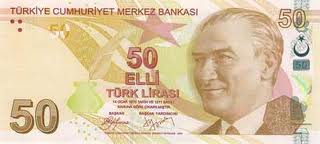
 ISTANBUL: Turkey's lira slipped against the US dollar on Wednesday as the government bond yield curve, which had briefly inverted on Tuesday because of speculation about an emergency rate hike to rescue the currency, returned to a positive slope.
The lira has hit record lows several times since Dec. 17, when a wide-ranging graft probe began with a series of dawn raids and arrests that have led to the resignation of three ministers and the reported dismissal of hundreds of police officers.
In the latest move by the ruling AK Party, it sent plans seeking more say over the appointment of judges and prosecutors to parliament late on Tuesday. "This is the latest sign that things are not about to calm down ahead of March local elections," a research note from Commerzbank said. Ratings agency Fitch warned on Tuesday that "strains on institutional integrity" caused by tensions between the government and judiciary were among factors that might eventually weaken Turkey's creditworthiness.
The lira slipped moderately to 2.1748 by 0917 GMT from 2.1605 late on Tuesday, though it was still firmer than Monday's record low of 2.1950. Meanwhile, the yield on Turkey's 10-year benchmark bond rose to 10.15 percent from 10.12 percent late on Tuesday, while the two-year yield fell back to 10.00 percent.
The curve is still much flatter than normal levels of around 50-100 basis points, but it has steepened from intra-day levels on Tuesday, when it was minus 7 bps. In the past, the bond curve in Turkey has sometimes inverted before monetary tightening announcements. Public comments by Finance Minister Mehmet Simsek on Tuesday may have partially reduced speculation about a monetary tightening as soon as the Jan. 21 policy committee meeting.
Simsek indicated that he expected the low-rate monetary policy to continue, saying Turkey was taking measures to keep domestic demand at reasonable levels without resorting to interest rate hikes - implying that he still had an understanding with the central bank on low rates.
News of lower-than-expected growth in industrial production reversed early gains by Turkish equities on Wednesday. Industrial output rose a calendar- and seasonally-adjusted 2.9 percent month-on month in November, missing a Reuters forecast of 4.2 percent but exceeding October's 0.7 percent increase.
The main Istanbul stock index was down 0.56 percent at 68,214 points, underperforming the main emerging market index , which rose 0.4 percent. "We can...say that the November figure did not indicate a genuine sequential growth of industrial output," Deniz Cicek, economist at Turkey-based Finansbank, wrote in a note.
"As further social and political unrest seems possible ahead of the two major elections this year, we see a noteworthy threat on economic stability that poses downward risk on the growth outlook in 2014."




















Comments
Comments are closed for this article.