



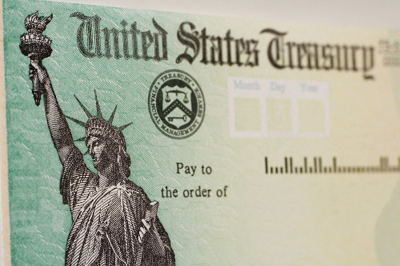
 NEW YORK: U.S. Treasuries prices rose on Monday after mixed readings on manufacturing and as markets waited for a policy statement from the Federal Reserve later this week.
The New York Federal Reserve said on Monday its "Empire State" manufacturing activity index rose in December to 0.98 from -2.21 in November. Economists polled by Reuters had forecast a stronger reading of 4.8.
Nationwide data on November industrial production, however, showed U.S. industrial production rose 1.1 percent in November, its largest gain in a year, aided by increased auto production and a big jump in utilities output.
The increase followed a 0.1 percent October rise and topped the 0.5 percent rise economists had forecast. Manufacturing output rose 0.5 percent, up for the fourth straight month.
Still, the market remained focused on what the Fed will say Wednesday about its bond-buying program, a strategy of buying Treasuries and mortgage-backed securities aimed at keeping interest rates low to encourage economic activity and boost employment.
Lower unemployment and some better economic numbers argue for the Fed to begin trimming its bond purchases but a third element, lower inflation than the Fed wants, could prove a stumbling block. The low inflation is a sign of the lack of demand that could imperil the recovery.
"The FOMC views the asset purchases as a way to kick-start the employment gains and we've got that," said Brian Jacobsen, chief portfolio strategist at Wells Fargo Funds Management in | Menomonee Falls, Wisconsin.
"There is little reason for them to continue purchases at their current pace. I think we'll see a $5 billion a month reduction in Treasury purchases announced at the December 18 meeting. They won't touch the MBS purchases as they want to keep mortgage rates low."
The latest purchase program has added over $1 trillion to the Fed's balance sheet. All three rounds of accommodation have added more than $3 trillion to the Fed's balance sheet.
Fed policy-makers who will meet Tuesday and Wednesday have worried that meager price increases put the economy at risk of deflation, a phenomenon that tends to slow economic activity.
On the open market, benchmark 10-year Treasury notes rose 5/32 in price, leaving their yields at 2.85 percent. They ended last week at 2.88 percent.
The 30-year bond rose 13/32 in price. Its yield eased to 3.86 percent.
Short-dated issues stabilized after their yields broke above key support levels on Thursday, suggesting anxiety about how long the Fed will keep policy rates near zero after it stops buying bonds, currently at a monthly pace of $85 billion.
Dealers face another wave of supply this week: $32 billion in two-year notes ; $35 billion in five-year debt ; $29 billion in seven-year notes and $16 billion in five-year Treasury Inflation-Protected Securities.






















Comments
Comments are closed for this article.