



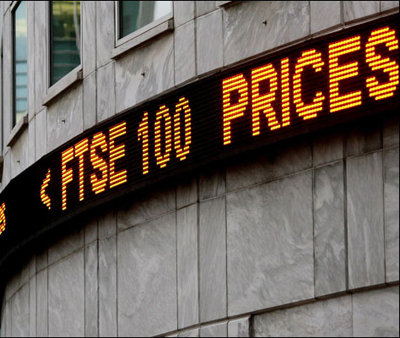
 LONDON: Airlines led Britain's top share index higher on expectations of lower fuel costs after a nuclear deal struck at the weekend between Iran and six world powers.
IAG, which owns British Airways and Spain's Iberia and Vueling, rose 2.8 percent to lead FTSE 100 gainers, while easyJet added 2 percent. Cruise operator Carnival also gained 1.8 percent as crude prices fell.
Tough sanctions against Iran in the past two years have slashed exports from the OPEC member by more than half, helping keep Brent above $100 a barrel despite weak global demand.
While Monday's Brent price of $109 was well within its recent range, investors were speculating future supply from Iran would help curb energy costs in the coming years.
Fuel accounts for between 30 percent and 45 percent of an airline's total costs, according to Mark Irvine-Fortescue, an analyst at Jefferies, who estimates airlines largely hedge that source of costs for the following six to 12 months.
"A lower oil prices is not going to affect earnings for the next couple of quarters but clearly if this is a new, lower level then (airlines) will be able to start locking in more attractive hedged prices and these will start to feed through to earnings a little bit further out," Irvine-Fortescue said.
Jefferies lifted its rating on easyJet to "buy" from "hold", and its target price to 1,620 pence from 1,470 pence, citing greater confidence in the group's competitive position. On IAG, the broker lifted its target to 410 pence, from 355 pence.
On the flipside, shares in oil companies came under pressure. BP was off 0.5 percent, BG Group 0.8 percent weaker, and Royal Dutch Shell off 0.5 percent as the agreement led Brent crude to post its biggest daily drop in more than three weeks.
Energy services group Petrofac bucked the trend, rising 1.9 percent after the firm said its joint venture with South Korea's Daelim Industrial Co had won a $2.1 billion contract for a refinery project in Oman.
The UK benchmark was up 20.72 points, or 0.3 percent, at 6.695.02 points at 1117 GMT, leaving it roughly 2 percent below a five-month high of 6,819 hit on Oct. 30, and taking its yearly gain to nearly 14 percent.
Equities remain supported by central bank stimulus, which has dulled returns in alternative asset classes such as bonds and cash, and traders bet on a continuation of the positive momentum despite valuations being near long-term averages.
The FTSE 100 trades on a 12-month forward price/earnings ratio of 12.7 times, against its 10-year average of 12 times, according to Thomson Reuters Datastream.
But Alpari analyst Craig Erlam said the index should encounter resistance at 6,711 - Friday's high - and then at 6,732, its high of last week.
Above here, further resistance should be found at 6,779, 6,800 and 6,819, all of which are previous levels of resistance, Erlam said.




















Comments
Comments are closed for this article.