



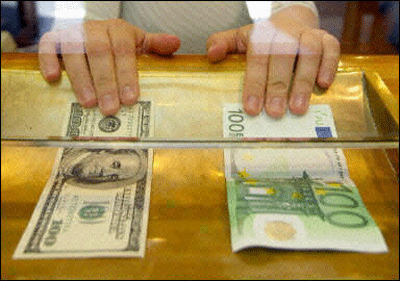
 TOKYO: The euro fell against the dollar in Asia on Wednesday as profit-taking hit the common European currency after its rise to a nine-week high, dealer said, as the British pound continued to struggle.
The euro bought $1.3665 dollars in Tokyo morning trade, down from $1.3682 in New York late no Tuesday.The euro briefly rose to a high of $1.3703 there, passing $1.37 for the first time since November as greater confidence in the eurozone's ability to manage the heavy debts of its worst economies continued to support the euro.
The single currency eased to 112.34 yen from 112.58. The greenback fell to 82.04 yen from 82.20.
The European Financial Stability Facility (EFSF) launched a landmark five-year bond auction worth five billion euros ($6.8 billion) to raise funds for Ireland, with high demand helping calm markets recently roiled by debt concerns.
"It may well be a turning point" in the eurozone debt crisis, EFSF head Klaus Regling said.
The dollar was undermined by lower US Treasury yields on speculation that President Obama could push for an overall budget freeze to bring the deficit to a sustainable level in his State of the Union address.
The euro was is prone to further profit-taking following its overnight rise and before the closely watched outcome of a meeting of US central bankers, said Junichi Ogawa, a market analyst at FX Online Japan.
"Given the recent rise (in the euro), profit-taking may pick up" ahead of the outcome of the policy-making Federal Open Market Committee, he told Dow Jones Newswires.
The committee is not expected to change rates, but ears will be primed for any hint of worries about inflation.
Ogawa added the euro was likely to maintain a bullish trend in the near term on inflationary pressure in the eurozone, as reflected in consumer prices and other data as well as a strong economic recovery in Germany.
The dollar held strong against the pound following a surprise 0.5 percent contraction for the British economy in the last quarter of 2010.
Sterling fetched $1.5790, down from $1.5814 in New York.
"Generally across markets sentiment was somewhat lacklustre, after the UK growth numbers reminded investors that the expected global growth recovery is not without risks," said Mike Jones, currency strategist at the Bank of New Zealand.




















Comments
Comments are closed for this article.