



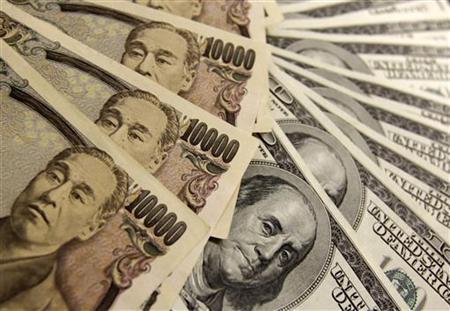
 TOKYO: The dollar fell against the euro and yen in Asia Wednesday after US President Barack Obama called for a freeze in federal discretionary spending in his State of the Union speech, dealers said.
The euro bought $1.3697 dollars in Tokyo afternoon trade, up from $1.3682 in New York late Tuesday, where the unit earlier passed $1.37 for the first time since November.
The single European currency eased to 112.34 yen from 112.58. The greenback fell to 82.11 yen from 82.20.
Benchmark 10-year US Treasury yields fell 8.0 basis points to 3.324 percent Tuesday in New York and stayed around 3.350 percent in Asia on growing expectations the United States may cut its spending in coming years, allowing the government to issue fewer bonds.
Eyeing the ever-swelling US debt, Obama vowed sweeping reforms to government, while warning political foes against spending cuts that would undermine the economy.
Obama said Washington must now acknowledge budget constraints, but insisted lawmakers should wield a scalpel rather than an axe when tackling spending.
Market reaction to the address was limited, however, since almost all of the key points were known in advance, dealers said.
Trading was also subdued as investors awaited the outcome from a Federal Open Market Committee (FOMC) meeting due later in the day.
Recent US economic indicators have been strong, but concerns remain over the employment sector, said Osao Iizuka, head of forex trading at Sumitomo Trust & Banking.
"If some negative comments on employment come out (at the FOMC meeting), that would lead to further dollar-selling," Iizuka told Dow Jones Newswires.
Confidence in the eurozone was buoyed after the European Financial Stability Facility (EFSF) launched a landmark five-year bond auction worth five billion euros ($6.8 billion) to raise funds for Ireland, with high demand helping calm markets recently roiled by debt concerns.
Junichi Ogawa, a market analyst at FX Online Japan, said the euro was likely to maintain a bullish trend in the near term on inflationary pressure in the eurozone, as reflected in consumer prices and other data as well as a strong economic recovery in Germany.
The pound gained stability in the afternoon after falling on a surprise 0.5 percent contraction for the British economy in the last quarter of 2010.
Sterling fetched $1.5825, up from $1.5814 in New York.
The greenback was mixed against regional Asian currencies, edging up to Tw$29.03 from 29.02 on Tuesday and to 1.2805 Singapore dollars from 1.2794.
The greenback fell to 1,117.05 Korean won from 1,117.80, to 9,037.00 Indonesian rupiah from 9,050.00, to 44.45 Philippine pesos from 44.47 and to 30.84 Thai baht from 30.98.



















Comments
Comments are closed for this article.