



 MOSCOW: The Russian Finance Ministry said it opposes a proposed shift to a profit-based tax for oil companies rather than taxing output and exports, because its priority is to maximise revenue for state coffers.
Russian tax authorities have long relied on counting barrels to ensure steady revenues, but with output in the world's largest oil producer reaching a plateau, the industry has lobbied for a profits-based system that better reflects exploration costs and risks
.
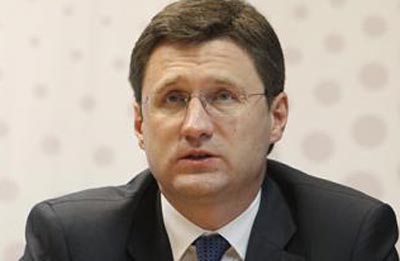
Energy Minister Alexander Novak said this month the long-mooted idea of profit-based tax could be tested in a pilot project this year.
"We are decisively against it. Lots of tax benefits have already been introduced for the oil companies," Ilya Trunin, head of the tax, customs and tariff department at the Finance Ministry, said in an interview on Friday.
The oil-producing heartland of Western Siberia accounts for 60 percent of Russia's production of over 10 million barrels per day equivalent. Output in the region has been falling by around 1 percent per year.
Analysts say these 'brownfields' will continue to account for the lion's share of Russian production in the years to come, despite companies' push to extract oil in new oil provinces such as East Siberia and the Arctic offshore.
Growth from these 'greenfields' alone would not be enough to boost overall output, and unconventional reserves such as hard-to-recover tight oil would need special tax treatment to be economically viable.
Tweaks to the tax system in recent years have reduced the marginal tax rate on each barrel of crude exported to 82 percent from around 87 percent, which an adviser to the Energy Ministry says is still too high to create an incentive to invest.
"Fiscal stimulus measures should be taken before oil production starts to decline. And one of the key such measures should be the introduction of a profits-based tax," Denis Borisov, director at Moscow's oil and gas centre of Ernst & Young, said.




















Comments
Comments are closed for this article.