



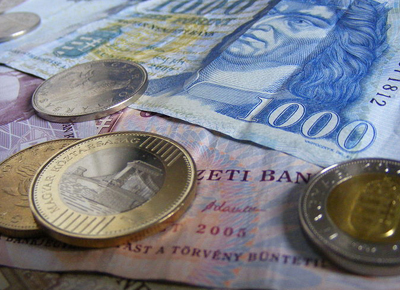
 WARSAW: Emerging European currencies strengthened on Monday after Cyprus secured a bailout deal, though the Hungarian forint stayed under pressure after the central bank's new leadership signalled policy would be less transparent.
The forint has lost 5 percent against the euro so far this year, underperforming its regional peers, as a leadership change at the central bank, which has ushered in new policymakers picked by populist Prime Minister Viktor Orban, has unnerved markets.
On Monday, the bank said new Governor Gyorgy Matolcsy had decided to stop holding regular news conferences after the bank's monthly rate-setting meetings, raising concerns that the bank will be less transparent than previously.
"This means that the broad direction of policy will remain largely a mystery post-MPC (meetings), and we expect the statement will not be particularly informative," Nomura analyst Peter Attard Montalto said.
By 1350 GMT, the forint was flat against the euro at 306.5. Longer-term Hungarian debt yields fell 4-7 basis points from the previous session.
"The news from Cyprus helped, yields are lower," one Budapest-based fixed income trader said.
Analysts polled by Reuters expect Hungary's central bank to cut interest rates by a quarter point to a record low 5 percent on Tuesday, the eighth consecutive rate cut. It will be the first rate decision under the new governor.
Other emerging European currencies were supported by rising risk appetite after Cyprus reached a bailout agreement with international lenders, just hours before a deadline to avert the collapse of its banking system.
No deal could have forced the island out of the euro zone. The Czech crown and Romanian leu were up 0.3 percent versus the euro, while the Polish zloty advanced 0.2 percent.
In the Czech Republic, March business confidence indicators released on Monday painted a less gloomy outlook for the economy, which has been stuck in its worst downturn for 15 years.
Markets are starting to look ahead to next week's Polish central bank rate meeting. A Reuters poll showed analysts widely expect borrowing costs to stay at a record low 3.25 percent well into next year.
However, market interest rates are pricing in another two quarter-point reductions, as many traders expect the Polish economy to underperform in coming months.




















Comments
Comments are closed for this article.