



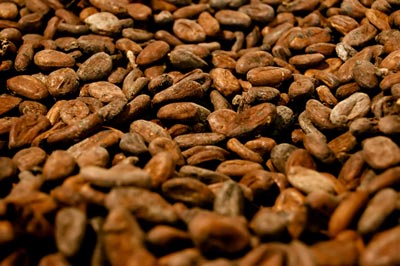
 LONDON: ICE cocoa extended gains on Thursday after Europe's first-quarter grind rose 3.5 percent, at the upper end of expectations, in part due to the replacement of lost capacity in Ivory Coast.
Sugar futures eased, weighed by a larger than expected Thai crop as dealers focused on approaching expiries of Liffe and ICE contracts, while arabicas firmed, underpinned by tight supplies of high-quality beans.
In the cocoa market, buoyant European grind data provided support. Grinding capacity utilisation in Europe was forecast to have increased due to a lack of activity in top cocoa producer Ivory Coast after a power struggle.
"Short term it's definitely positive but if you put it into context we've basically got grindings unchanged for October-March against the previous year," an analyst at a European commodities fund said.
"That story of slow growth in Europe and very limited grind growth continues and it's being offset in Ghana, Indonesia, Malaysia and obviously Ivory Coast is still grinding a lot of cocoa when it's available," the analyst added.
Cocoa futures were bolstered by worries about possible disruptions to the mid-crop harvest in Ivory Coast even as exports were set to resume from the country after months of political turmoil.
Ivory Coast's cocoa industry has been at a standstill after a disputed presidential election in November led to EU sanctions, a ban on cocoa exports and a crippled banking system.
Ivory Coast's two main ports will reopen this week with ships likely to arrive by next week, paving the way for a resumption of cocoa exports from the world's top grower, a spokesman for President Alassane Ouattara said on Wednesday.
Abidjan port terminals are likely to resume loadings of cargo such as cocoa from early next week, a senior official with shipping group Maersk told Reuters Insider television on Thursday.
"The (cocoa) market is waiting for a 'for-sure' normalisation (of trade) before we see a downward correction," said Keith Flury, a soft commodities analyst with Rabobank.
"Once ships begin (to export), I think we'll see a little bit of a correction (in cocoa futures prices)," Flury told Reuters Insider.
He said he saw key support in benchmark, second-month ICE cocoa futures at $2,800 per tonne.
Germany's first-quarter 2011 cocoa grind rose 22.7 percent on the year to 108,816 tonnes, the association of German confectionery producers BDSI said on Thursday. The association said the large rise was partly due to a change in statistical calculation, because more companies were contributing grinding data than in the first quarter of 2010.
ICE second-month, July cocoa was up $59 or 1.9 percent to $3,129 per tonne in modest volume of 6,344 lots at 1416 GMT, below the 32-year high of $3,775 per tonne touched on March 4.
London second-month, July cocoa was up 26 pounds or 1.3 percent to 1,972 pounds per tonne in turnover of 3,439 lots.
SUGAR EXPIRIES
ICE raw sugar futures dipped, pressured by bigger-than-expected Thai and Pakistani output and prospects for an ample crop in Brazil as worries over weather eased.
"The biggest concern for the sugar complex at present is the size of the Thai crop and the quantity of unsold raws and whites in-country," said one European soft commodities analyst.
"If reports are correct and the final Thai crop ends close to 90 million tonnes we could see large quantities of Thai raws tendered against the May New York contract."
The ICE May contract expires on April 29. The Liffe May contract expires on Friday.
ICE July raw sugar futures fell 0.17 cent or 0.7 percent to 24.48 cents a lb at 1418 GMT.
London May white sugar rose $5.50 or 0.8 percent to $696.90 per tonne in moderate volume of 4,918 lots.
Arabica coffee prices were slightly higher, standing at below last month's 34-year high, supported by a shortage of high quality beans.
"The roasters have produced more and more high quality blends and now they can't get hold of the high quality coffee," a London-based broker said.
Bad weather, a tree renovation programme, and pests in the previous two years cut output in top quality coffee producer Colombia by about one-third.
While this year's crop is forecast to rebound, it will still be below historical averages of 11 million 60-kg bags.
Barclays Capital said in a daily report, "Rains in coming months remain a key risk, with weather forecasts for three times more rain than average during the April-June rainy season due to the La Nina phenomenon.
"In addition, a quick turn from dry to wet weather also increases the risk of roya fungus infecting the trees."
The roya fungus attacks coffee leaves and impedes photosynthesis.
The London-based broker said, "There's a nervousness around because technically the market looks strong, we're about 15 cents off last month's highs."
ICE July arabica coffee rose 0.75 cents or 0.3 percent to $2.8445 per lb at 1419 GMT.
Liffe July robustas were down $20 or 0.8 percent to $2,480 a tonne in modest volume of 4,859 lots.




















Comments
Comments are closed for this article.