



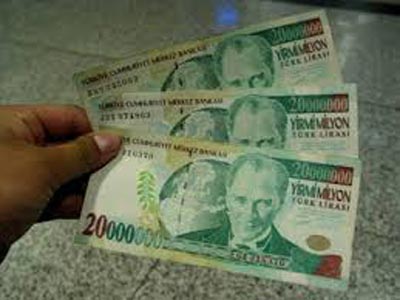
 ISTANBUL: Turkish shares and the lira weakened on Tuesday as investors sold riskier assets after the central bank cut rates and an indecisive Italian election fuelled fears of political instability, while bond yields were flat.
Turkey's central bank cut its overnight lending and borrowing rates by 25 basis points on Feb. 19 to prevent speculative capital inflows from boosting the lira currency too sharply.
Italy faced a political vacuum after a huge protest vote left no party or likely coalition with enough seats to form a majority in the upper house.
The stalemate could hamper the reforms financial markets believe are needed to tackle the economic problems of the euro zone's third-largest economy.
By 0816 GMT, the lira was at 1.8111 to the dollar , after earlier hitting its weakest level since mid-October of 1.8148, down from 1.8010 late on Monday. Against its euro-dollar basket it firmed to 2.0883, from 2.0927.
Investors are also monitoring Federal Reserve Chairman Ben Bernanke's testimony to Congress on Tuesday and Wednesday, in which he is expected to downplay the idea that the central bank could prematurely end its massive monthly bond-buying programme.
"The weakening of the lira started when the central bank cut its rates. The elections in Italy accelerated this trend," said Tufan Comert, strategist at Garanti Securities.
"However, if Bernanke's speech this evening calms the markets, we can see the lira strengthening against the dollar following the rise in the euro-dollar exchange rate," he added.
Istanbul's main share index was down 0.7 percent at 76,134 points, outperforming a fall of 1.04 percent in the global emerging markets index.
Turkey's Competition Board will continue its meeting with a dozen banks on Tuesday to hear their defence for alleged collusion in setting loan rates, with a final verdict due within 15 days.
Analysts at Oyak Securities said the board's investigation was also a source of concern for investors.
The yield on the two-year benchmark bond was flat at 5.73 percent.

























Comments
Comments are closed for this article.