



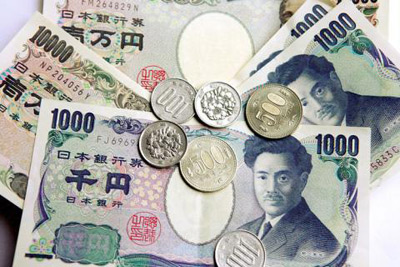
 TOKYO: The yen slid further in Asia Wednesday, amid expectations the Bank of Japan will maintain easy monetary policy as counterparts such as the US Federal Reserve signal possible tightening. The central bank began a two-day meeting on Wednesday to assess its next step in soothing an economy ravaged by its biggest-ever recorded earthquake, a subsequent tsunami and a nuclear crisis. While the central bank is expected to keep its key interest rate between zero and 0.1 percent on hold, it may signal readiness for further easing amid expectations the impact of the March 11 disaster will push Japan into a recession. The yen traded at a more than six-month low of 85.42 to the dollar from 84.84 in New York. It was at 121.84 yen to the euro from 119.75 yen. The euro was at $1.4257, from $1.4152. The yen has continued to fall after the Group of Seven nations jointly intervened to weaken the currency after it hit a post World War II high against the dollar.
"The desire for risk and the desire for higher yield is the dominant theme in the markets," Kathy Lien, director of currency research at GFT Forex in New York, told Dow Jones Newswires. Markets were also braced for a European Central Bank interest rate hike Thursday, the first since July 2008. ECB president Jean-Claude Trichet said last month that the bank's record low rate of 1.0 percent might be raised amid concern that inflation now at 2.6 percent could spiral out of control.
"The view that the ECB is going to raise rates for sure on Thursday and most likely follow up with additional rate hikes throughout the year is keeping the euro well-supported across the board," said Omer Esiner, chief market analyst at Commonwealth Foreign Exchange in Washington. Traders also digested news that the Federal Reserve edged toward ending years of ultra-loose monetary policy in the face of a building US recovery and looming inflation fears. Minutes from the latest Federal Open Market Committee policy meeting showed members discussed ending long-standing policies, including ultra-low interest rates, aimed at restoring economic growth after the 2007-2009 recession. Tuesday's rate hike by China, meanwhile, pressured some of the commodity currencies most sensitive to global economic growth prospects with the Australian dollar at $1.0365 to the greenback, off Monday's record $1.0417.




















Comments
Comments are closed for this article.