


There has been a sustained erosion of the rupee value vis-a-vis the dollar subsequent to the categorical statement by the caretaker finance minister Dr Shamshad Akhtar that market intervention to artificially prop up the rupee is not sustainable. That she is technically correct is not in doubt though this does not imply that there would be no negative repercussions on key macroeconomic indicators as well as on the quality of life of the public as a consequence of her decision.
Ishaq Dar, Federal Finance Minister for over four years during the Sharif administration, remained committed to keeping the rupee rate at an "appropriate" level - a level determined by explicit (though economically flawed) instructions he received from the then Prime Minister Nawaz Sharif which also satisfied his accounting expertise by enabling him to understate the budgeted allocation for meeting external debt repayments as and when due. Dar was simply not qualified to comprehend that this policy was not sustainable in the medium to long term as it would lead to a rising current account deficit. His successor Miftah Ismail, with far less political clout than Dar, was prevailed upon by the International Monetary Fund (IMF) visiting mission in December 2017 to depreciate the currency by around 5 percent. This was insufficient to arrest the widening trade deficit prompting Ismail to depreciate the rupee by another 5 percent in March 2018. Ismail's projection that the rupee would settle at 115 rupees to the dollar in the open market has been shown to be grossly inaccurate given the current rate of 124.4 rupees to the dollar in the open market on Friday. And it would surprise no one that the caretaker Finance Minister Shamshad Akhtar, an economist, has decided to allow the rupee value to be determined in the market.
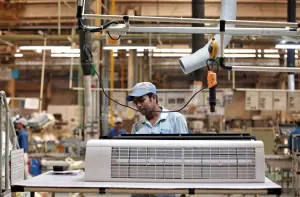
Conventional economic theory dictates that an overvalued currency would negatively impact on the total value and quantity of exports as foreign buyers begin to prefer importing from countries where the exchange rate is not overvalued while imports would rise as they become more attractive. This accounts for the conclusion that a currency reflective of its real market value, as opposed to its nominal value, would improve a current account deficit. The major components of the current account balance are imports and exports. Imports increased from 42.6 billion dollars in fiscal year 2016 to 53.1 billion dollars in 2017. Imports in July-May 2016-17 were 48.3 billion dollars while for fiscal 2018 the comparable figure is 55.2 billion dollars. In other words, imports have continued to increase, notwithstanding the two depreciations by Ismail which were clearly not enough to bring the rupee value at par with its market rate. June 2018 imports are projected to surpass the comparable figure for the year before perhaps due to speculative imports based on the market perception that the rupee would depreciate to 140 to 150 rupee to the dollar before it stabilizes or perhaps because imports reflect a consumer trend that is likely to resist a rise in costs.
Exports have risen in recent months - from the low of 21 billion dollars (low in comparison to the 25 billion dollars during the Zardari-led government) to 23 billion dollars in 2017. Total exports between July-May 2017 were 18.5 billion dollars while the comparable figure for this year is estimated at 21.3 billion dollars - a rise attributable not only entirely to the decision on the rupee rate but also due to a 180 billion rupee package announced in January 2017 which was re-enforced by the Abbasi-led government. However, exporters complain that the government released less than 30 billion rupees of the package and has yet to release around 200 billion rupee refunds. Additionally, they point out that utility tariffs in Pakistan are higher than in competing countries, which implies higher costs of production and a consequent negative impact on export growth. And the most disturbing element of the export and import figures for the country is the fact that the widening of the trade deficit could not be arrested. Thus, it rose from a negative 25 billion dollars in 2016 to a negative 34.6 billion dollars in 2017. In July-May 2017, the trade deficit was estimated at a negative 29.8 billion dollars and this rose to a negative 33.8 billion dollars in 2018.
Net borrowing to balance the current account deficit (capital account deficit was small) was estimated at a negative 6.8 billion dollars in 2016, a negative 15.4 billion dollars in 2017 (the two years when Dar was the functional finance minister). The figure for the current year is expected to be in excess of 17 billion dollars.
What is extremely disturbing is that notwithstanding the claims made under the China Pakistan Economic Corridor total direct investment and portfolio investment are also in the negative as per data uploaded on the State Bank of Pakistan (SBP) website; and gross reserves sadly continue to reflect Dar's flawed definition (reserves held by the SBP plus foreign currency held in commercial banks though all international agencies/other governments indicate the reserves as only those held by their central banks which are available to the government and not those held by the private sector).
Thus to maintain that imports would decline and exports rise once the rupee finds its market value may reflect conventional economic wisdom but may require further measures to make a difference given that: (i) we are a country with several thousands of miles of very porous borders that fuel extremely high rates of smuggling coupled with an anomalous and unfair tax structure obsessed with higher revenue generation that further supports smuggling activity; (ii) utilities particularly energy being supplied at a rate well above the regional average due to some rather disturbing decisions by the PML-N government including heavier reliance on LNG and coal to meet the electricity shortfall rather than on water, and (iii) our existing laws allowed 15 billion dollars to be legally taken out of the country, a figure revealed by the State Bank of Pakistan in the court. These laws require immediate amendments. In addition, a sizeable portion of money continues to leave the country through the illegal hundi/hawala system, requiring further remedial measures.
What is required at the same time as allowing the rupee to reach its market rate is therefore sealing of our borders, a thoroughly revamped tax structure that would make smuggling an unprofitable exercise, curtailing legal imports through the SBP, raising the cash margin requirement to 100 percent on all goods except essentials like fuel, and releasing refunds though with a projected unsustainable budget deficit for the year just past - to the tune of over 8 percent of GDP - perhaps adjustment in future taxes to be paid by the exporters would be the need of the hour.










Comments
Comments are closed for this article.