


'This country should be run to make businesses thrive, not just to run a government,' Muhammad Zubair Khan, former Commerce Minister
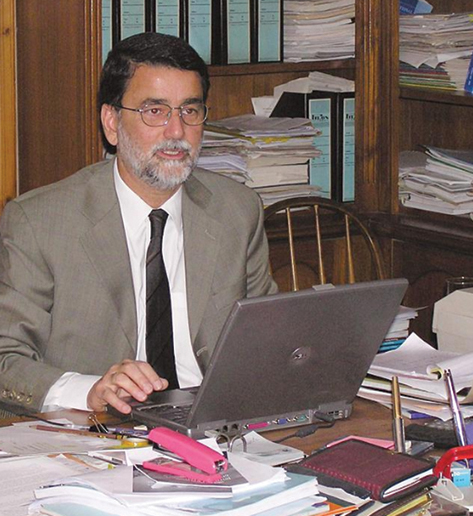
Dr Muhammad Zubair Khan is currently CEO of a successful start-up company producing Pakistan's only internationally certified natural mineral water called O1 (www.o1naturallypure.com), and is also an international consultant in macroeconomic issues with over two decades of consulting experience with donors and multilateral institutions. He spent over a decade with the IMF, before serving as Pakistan's Commerce Minister from 1996-97.
BR Research met with Dr Zubair to discuss a variety of topics ranging from CPEC, trade to taxation and state-society relations. Below are edited transcripts of the refreshingly candid, wide-ranging discussion.
<B>BR Research: Let's talk about CPEC. What is China's interest, and why now?</B>
<B>Zubair Khan:</B> CPEC is a great opportunity for Pakistan. But it is also of strategic economic significance to China. There's the south-China sea confrontation between the US and China. The straits of Malacca are a bottleneck; it's a major threat to their energy pipeline. CPEC provides the alternative route for China's energy supplies.
Why now? Firstly, they could not come earlier because the US was in Afghanistan. Secondly, the US was destabilizing Pakistan with India's help. That has been successfully defeated by our Zarb-e-Azb. So now, China announced CPEC. And within six months, they've sent the first convoy.
<B>BRR: What advantages do you see for Pakistan from CPEC apart from the investment?</B>
<B>ZK:</B> Because China's large economy has become intertwined with ours, we should be able to benefit. How? Along with the infrastructure, they want to develop power as well. Tying their economic future with Pakistan's wellbeing, Pakistan will not need to get into an arms race with India. Now, the future of Pakistan's defence lies in the mutual defence of China and Pakistan. China is a source of stability in the region.
Other advantages depend on whether or not the people are enabled to benefit from the Chinese investments. You need to enable your people and reduce the cost of doing business to benefit from the ancillaries and the offshoots. The main thing is that the route forms an alternative to the shipping routes. Industries could get located along it or close to it and from there they will export to the huge Chinese market, whereas Chinese businesses will also relocate along the corridor bringing employment and will be exporting abroad from there.
<B>BRR: Does private sector have sufficient information about CPEC? Our experience leaves us to believe that they're in an information void.</B>
<B>ZK:</B> Same with me. All I know is that there's this road going down, and the Chinese will be using it to transport their goods to Gwadar. This is what I know.
<B>BRR: Is our trade and logistics infrastructure ready, say for instance the TIR. What are the main issues regarding implementation of TIR in Pakistan?</B>
<B>ZK:</B> You've got to have the right kind of transport vehicles, which will get TIR carnet. Each country has an organization that gives an assurance or guarantee against anything that violates the customs declaration. This institution is normally a semiautonomous, non-government institution. We don't have one. Afghanistan has been member of TIR since mid-80s, but it hasn't used it. Recently they issued two carnets, but what difference did it make?
When they send a truck, we say there's smuggling. They say you're stopping our truck, our perishables are suffering. Putting it in the international regional context, you've got to have the trade facilitation mechanisms in place; it needs to be smooth and efficient, so they can e-read it, all of the details (what's in the truck, where is it going, what's the driver's name) is given in one flash. Only then can 1,000 Chinese trucks pass swiftly in one day. Otherwise it can't happen!
<B>BRR: Do you have independent estimates on the impact CPEC would have on debt and foreign outflows?</B>
<B>ZK:</B> Not in detail but one can clearly see that whatever CPEC-related infrastructure investment there is, it will generate revenues locally in rupees. If it's a road, there's a toll, it's in rupees. Power will be sold in rupees. While the servicing- both of interest/debt repayment and profits - will be in dollars. So, it will have a short-term net negative effect on the balance of payments. Unless, economic activity picks up and it earns enough forex.
But right now, your exports are coming down. How will you get the economy going? That's why I'm saying you are at a crisis point in the economy. That's why you need to rethink economic policy in Pakistan. If this correction doesn't happen now, it's going to be very sad for Pakistan.
<B>BRR: What 'rethink' do you suggest?</B>
<B>ZK:</B> We need to make all taxation and rules and regulations on the guiding principle of facilitating businesses. This country should be run to make businesses thrive, not just to run a government. The government is there to provide services. We have to completely invert the incentive issue.
I think corporate tax rate should be brought down. I don't believe in flat tax rate. At the bottom; there should be some progression, less pressure on the poor - make it two-tier.
No economy in the world can flourish with GST 17.5 percent. It becomes a direct tax on manufacturers and businesses at such high rates, choking Pakistan's businesses. Bring it down to single digit - anywhere between 5-8 percent. Corporate tax rate should not be more than 20 percent. Although the tax-GDP ratio is low, Pakistan's tax system is extortionist: extremely high rates with multiple taxes on those who are paying. Those who are paying are paying through their noses. Pakistan's maximum corporate rates should be among the lowest in the world so we become a tax haven and everyone, including Pakistanis to bring their capital into Pakistan and invest here.
Agriculture income tax will yield revenue when tax authorities estimate the income from agriculture realistically, to account of agriculture's vagaries. I'm an agriculturist myself, I know the problems. They take a flat rate from us in KP on the land. That's because they can't calculate anything else. You need to make it better.
Then there's tax collection from route permits. Transport is the bloodline of commerce. If you stifle it, how can you grow? Make it smoother and centralized. You should just need one route permit that can let you go anywhere in Pakistan. We should have a single jurisdiction route permit.
<B>BRR: Do you see these things changing?</B>
<B>ZK:</B> State institutions are not run the way they are supposed to. They are not meritocracies. They are all infested with people who don't deserve these positions. They are inefficient; they don't take the right decision. They are beholden to their political masters who appointed them, so they will never do the right thing.
This democratic system cannot fix it so we require a rethink of the constitution. The constitution right now will not allow that to happen. We require a complete rethink.
The national level government should be elected on a direct election basis, and you can have merit-based national government. Provincial and local level should have democratic system because they deal with those services of the government with which people are directly related. The voters are concerned with where they want a water supply, a basic health unit, etc.
Local government is the most important part, and they have suppressed it entirely. Even at the provincial level, there are services where people are directly affected, and they have a meaningful say in determining who will head it. But when it comes to national level - defence, foreign policy, macroeconomic policy - the local people, villagers, how can they know? How can they say who should run that particular level government? We have to rise above these petty interests and rise to national level interest.


















Comments
Comments are closed for this article.