



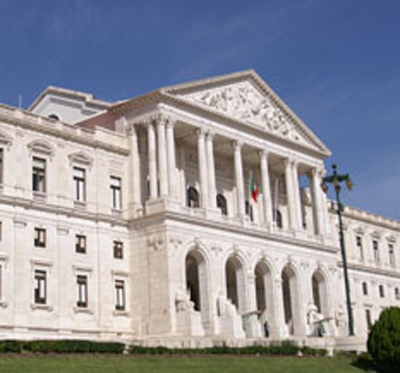
 LISBON: The Portuguese government will meet international lenders next week to try to agree on long-promised structural reforms to be implemented under the country's bailout, a European Commission source said on Friday.
Lisbon's informal meetings with representatives from the troika of lenders, comprising the International Monetary Fund, European Union and European Central Bank, will be organised as a seminar on Jan. 19-21, before next month's quarterly inspection of the implementation of Portugal's 78-billion-euro bailout.
"The workshops will focus precisely on structural reforms needed, such as in the labour market, and will involve technical representatives from the troika," the source said, adding that the quarterly evaluation in February was still likely to focus more on the economic and fiscal performance rather than reforms.
A government source said the meetings are designed as a "debate forum" behind closed doors, and will also involve business leaders, economists and public figures.
The lenders have lauded Portugal's progress in its budget consolidation efforts achieved via painful austerity measures, but the country is yet to get structural reforms, designed to improve competitiveness, off the drawing board.
The country promised reforms in its inflexible labour market and its snail-paced justice system when it signed the bailout deal last May. Painful austerity has thrown Portugal's economy into its deepest recession in decades, and it needs to boost competitiveness soon to be able to grow.
The government is still discussing reform proposals with the unions and employers in a thorny collective bargaining process and several meetings have failed when unions walked out of meetings.
Local media has speculated the government may drop a controversial proposal to increase the working day by half an hour to get unions to agree to more important changes to labour laws such as reductions in layoff compensation.
Portugal reduced its budget deficit last year to an estimated 4-4.5 percent of GDP from 9.8 percent in 2010, but mainly thanks to a one-off transfer of banks' pension funds to state coffers. Without it, the deficit would have been around 8 percent of GDP, above the 5.9 percent target under the bailout.
This year, Portugal has to have a deficit of no more than 4.5 percent of gross domestic product and the troika has warned it can no longer resort to one-off measures similar to the transfer.
























Comments
Comments are closed for this article.