



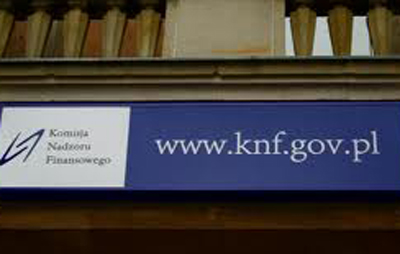
 WARSAW: Financial watchdog KNF is considering taking steps to encourage banks to lend to each other more, fearing that a stalled interbank market would discourage lending and hurt the wider economy, its deputy head told Reuters in an interview.
Polish banks, concerned with the impact of the euro zone debt crisis on the wider economy, have become increasingly reluctant to lend each other funds. They also keep some 80-90 billion zlotys ($23-$26 billion) at the central bank.
The dwindling of longer-term borrowing between banks may in the long run mean that companies would face a more difficult time finding funding, forcing them to cut investments and hurting the relatively resilient Polish economy.
"The banks are lending to each other for a day, but for three months, rarely," KNF's Wojciech Kwasniak said in an interview cleared for publication on Thursday.
"If there is a need, we will issue a recommendation in which we would describe what are basis for setting up limits in cooperation on the interbank market, we can also check risk management at individual banks or prepare appropriate bills," Kwasniak said.
Poland's banks, which are 70 percent foreign-owned, have managed to avoid the worst of the excesses of the global financial crisis which has affected their larger western peers and some parents.
But their performance has been affected by weak global markets and concerns over the state of Europe's economy, which could force some foreign owners to lessen their support.
Kwasniak said KNF wants banks to lessen its reliance on funding from their foreign owners and on fickle depositors.
"We would like to see in five years 20 percent of financing coming from papers issued by banks, rated and listed on the (Warsaw bourse's) Catalyst exchange, secured by mortgages, credit cards or loans," he said.
KNF, under a new head appointed in October, will also seek to avoid another war over customer deposits after a previous battle two years ago demolished profits at several lenders.
Some observers expect lenders to offer high rates on deposits to create a short-term capital cushion, especially with the government seeking to crack down on special deposits that have allowed customers to circumvent a related tax.
"If KNF decides that a bank is offering interest rates on deposits that are too high and the risk is too high, it can decide that the bank should pay a higher contribution of the banking guarantee fund or to limit the bank's dividend payout," Kwasniak said. The watchdog has already signalled that banks should hold down dividend payments this year.
Kwasniak said that KNF would allow Pekao, Poland's No.2 lender, to pay a regular dividend if its parent, Italy's UniCredit, boosts its capital by the 8 billion euros ($10.3 billion) required by the European Banking Authority (EBA) by the end of June.























Comments
Comments are closed for this article.