


Pakistan seeks Libyan crude as it diversifies oil supplies amid Middle East supply disruptions
- Turkish seismic vessel is expected to arrive next month to begin data acquisition in the Indus Basin, says Petroleum Minister Ali Pervaiz
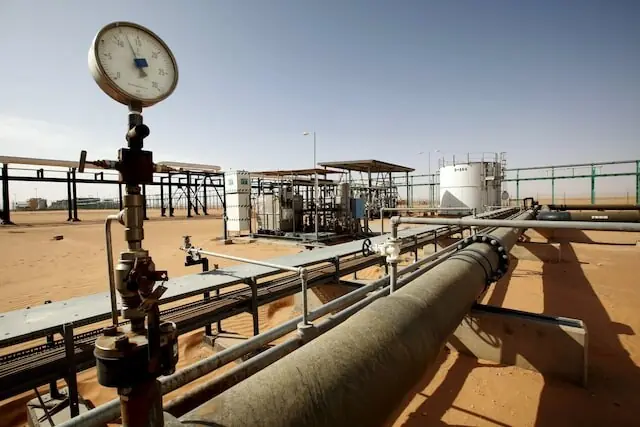
Pakistan has encouraged domestic refineries to explore imports of Libyan crude oil to diversify supply sources, while a Turkish seismic vessel is expected to arrive next month to begin data acquisition in the Indus Basin, Petroleum Minister Ali Pervaiz Malik said on Monday.
The development came on the sidelines of the 17th International Energy Forum (IEF) Ministerial Meeting in Riyadh, Saudi Arabia, read a statement on Monday.
Ali Pervaiz held a bilateral meeting with Khalifa Rajab Abdulsadek, Minister of Oil and Gas of Libya, to discuss avenues for strengthening cooperation in the oil and gas sector. The federal minister informed his Libyan counterpart that Pakistan had encouraged its refineries to explore imports of Libyan crude oil.
He emphasised that Pakistan aimed to diversify its crude oil supply sources to strengthen energy security and maintain alternative supply options in the event of disruptions to key maritime routes, including the Strait of Hormuz and the Bab al-Mandeb Strait.
Khalifa Rajab described Pakistan as an important country for Libya and said he would encourage Libya’s national oil company to allocate greater volumes of crude oil to Pakistani companies.
He also noted that Libya was planning to upgrade its refineries and expressed interest in learning from Pakistan’s experience in refinery upgradation.
Turkish Energy Minister Alparslan Bayraktar also called on Ali Pervaiz and stated he was looking forward to visiting Pakistan next month to receive a TPAO seismic vessel to start data acquisition in Indus Basin.
The petroleum minister also had a detailed breakfast meeting with the Energy Minister of the State of Qatar, Saad Sherida Al-Kaabi, to explore possibilities of cooperation in the LNG sector.
Ali Pervaiz was attending the IEF at the invitation of Prince Abdulaziz bin Salman bin Abdulaziz Al Saud, Minister of Energy of the Kingdom of Saudi Arabia.
Addressing the plenary session titled “Investment and Trade in Sustainable Energy Solutions: Making Energy Clean, Accessible and Affordable,” the federal minister highlighted that the global energy sector was entering a new investment cycle in which energy security, affordability and sustainability must advance together.
He emphasised that investment was needed not only in renewable energy but also in hydrocarbons, critical minerals and essential infrastructure, including grids and pipelines.
Referring to the unprecedented global energy supply shock of 2026, the minister noted that the crisis extended beyond oil and gas to shipping and insurance.
Despite its heavy dependence on imported energy, Pakistan had navigated the crisis without resorting to rationing of major energy sources, supported by the government’s response and cooperation from brotherly countries, including Saudi Arabia, Qatar and Kuwait, he said.
The minister said Pakistan was working to strengthen its long-term energy security architecture through the development of strategic reserves, a world-class bonded reserves scheme, greater indigenous energy production, critical infrastructure including refineries and tank farms, competitive electricity and gas markets, and targeted relief mechanisms.
He stressed that international investment and trade frameworks must balance innovation and sustainability with affordability, equity and access. Pakistan, he added, looked forward to working with all IEF member countries to advance shared energy security objectives for future generations.

Pakistan secures Sept fuel, eyes US crude via VLCC as conflict threatens fuel supplies
Pakistan seeks stronger energy ties with Saudi Arabia, refinery upgrade in focus
Pakistan’s OGDCL eyes consortium with Turkish Petroleum for Libya exploration
Pakistan seeking Middle East investment & tech in energy sector: minister

















Comments