


CM inaugurates digital classrooms, satellite schools for children with disabilities
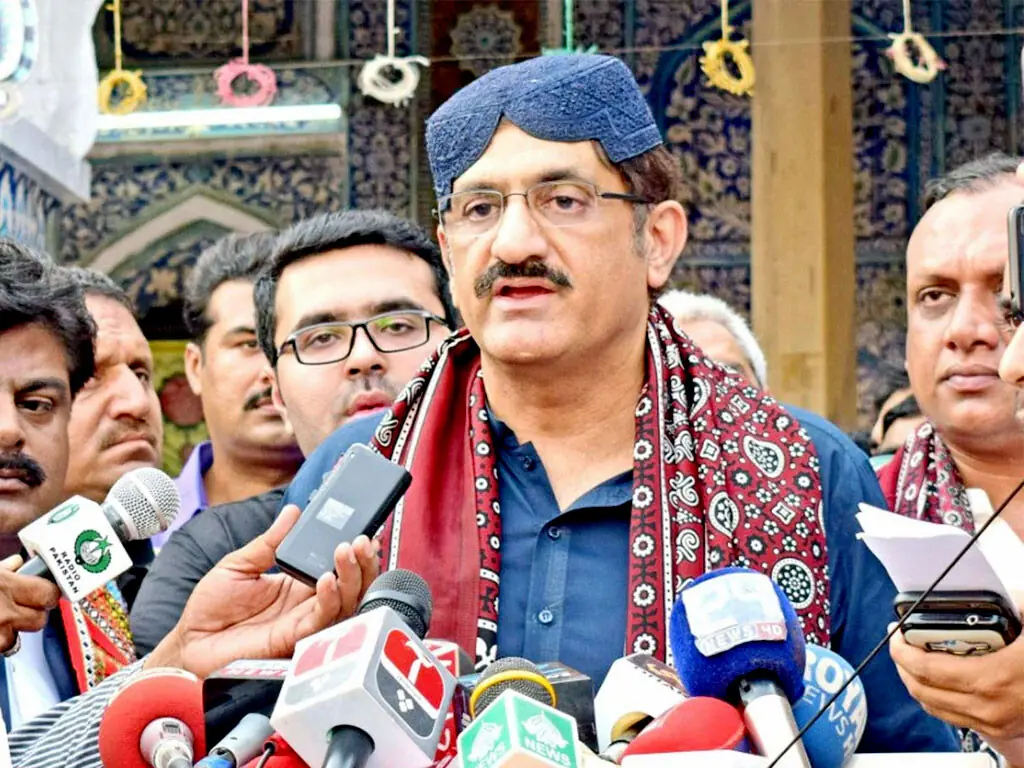
KARACHI: Sindh Chief Minister, Syed Murad Ali Shah on Monday reaffirmed his government’s commitment to inclusive and technology-driven education by symbolically inaugurating 49 Digital Classrooms in 37 Special Education and Rehabilitation Centres of the Department of Empowerment of Persons with Disabilities (DEPD), 20 Satellite Schools across Sindh, and a Sign Language Teachers’ Training Programme aimed at improving learning opportunities for deaf and differently-abled children throughout the province.
The inauguration ceremony was held at the Government Special Education and Rehabilitation Complex in Gulistan-e-Jauhar, where the chief minister, accompanied by DEPD Secretary Tuaha Ahmed Faruqui, Deaf Reach founder Richard Geary, education experts, teachers, parents, and development partners, reviewed the new facilities and interacted with students.
The initiative, implemented by the DEPD in collaboration with Deaf Reach and the Family Educational Services Foundation (FESF), is expected to expand access to quality education in remote and underserved areas. The 49 Digital Classrooms will benefit approximately 754 deaf students, while the 20 Satellite Schools will provide educational opportunities to around 476 children who previously had limited access to specialised education services.
Addressing the ceremony, the chief minister said the programme marked another important step towards ensuring equal educational opportunities for children with disabilities. “It is a great pleasure to be here today for an important milestone in our journey towards inclusive education and equal opportunities for children with disabilities,” he said.
Shah said the newly established digital classrooms would bring modern learning tools, smartboards, e-learning resources and technology-enabled education closer to students regardless of where they live.
“Today, we are symbolically inaugurating 49 state-of-the-art Digital Classrooms across 37 DEPD Special Education and Rehabilitation Centres, along with 20 Satellite Schools across Sindh. These facilities will bring modern digital learning and quality educational resources closer to our students,” he said.
The chief minister noted that while technology was transforming education, trained teachers remained central to effective learning. He said the launch of the Sign Language Teachers’ Training Programme would strengthen teachers’ capacity and promote Pakistan Sign Language as an essential tool for inclusive education.
“Technology alone is not enough. Capacity building of human resources is equally essential. This training programme will strengthen the capacity of our teachers and promote Pakistan Sign Language as an important tool for inclusive education,” he said.
The chief minister reiterated that the Sindh government remained committed to the welfare of approximately 20,000 students enrolled in 67 specialised institutions across the province. He said the government was providing rehabilitation, physiotherapy, speech therapy, transportation, nutritious meals and a monthly stipend of Rs 3,000 free of charge, while also supporting partner organisations through grant-in-aid programmes.
“With great hope and commitment, today we officially inaugurate the 49 Digital Classrooms, 20 Satellite Schools and the Sign Language Teachers’ Training Programme across Sindh. We look forward to expanding these initiatives further so that a comprehensive mechanism of welfare, education and development can be created for these children,” he said.
Welcoming the chief minister and guests, DEPD Secretary Tuaha Ahmed Faruqui described the initiative as a significant milestone in the province’s efforts to ensure inclusive and quality education for deaf and differently-abled children.
“Where distance, limited resources and lack of specialised facilities once restricted educational opportunities, technology is now helping bring quality learning closer to children and families across Sindh,” he said.
The secretary said growing enrolment reflected increasing parental confidence in DEPD’s services. He disclosed that around 500 students were currently enrolled at the Government Special Education and Rehabilitation Complex and the Government Vocational Training Centre for Persons with Disabilities in Gulistan-e-Jauhar, while nearly 810 children were waiting for admission due to rising demand.
“These numbers remind us both of the progress we have made and of the work that remains. Our objective is not merely to increase enrolment but to ensure that every child has the opportunity to learn, communicate, develop confidence, acquire skills and participate meaningfully in society,” he said.
Faruqui added that DEPD, with the support of the Sindh government and 140 partner organisations, had facilitated thousands of differently-abled persons through educational support, rehabilitation services and the provision of assistive devices.
Speaking through a virtual presentation, Deaf Reach founder Richard Geary highlighted the transformative role of technology in making education accessible to deaf children across Sindh. He said the digital classrooms and satellite schools would enable children in remote communities to access quality learning opportunities without the barriers traditionally associated with specialised education.
He appreciated the Sindh government’s continued support for inclusive education and said the partnership between DEPD, Deaf Reach and FESF demonstrated how collaborative efforts could create meaningful opportunities for children with disabilities.
Parents attending the ceremony also shared their experiences, expressing gratitude for the Sindh government’s efforts to expand educational facilities and support services for differently-abled children.
The chief minister later visited classrooms and facilities at the Special Education and Rehabilitation Complex, interacted with students and teachers, and reviewed ongoing programmes to improve education, rehabilitation and skills-development services for persons with disabilities. He also observed technology-driven teaching methods and learning activities.
The event concluded with the symbolic virtual inauguration of the digital classrooms and satellite schools across Sindh, marking a major expansion of technology-enabled and inclusive education services in the province.




















Comments