


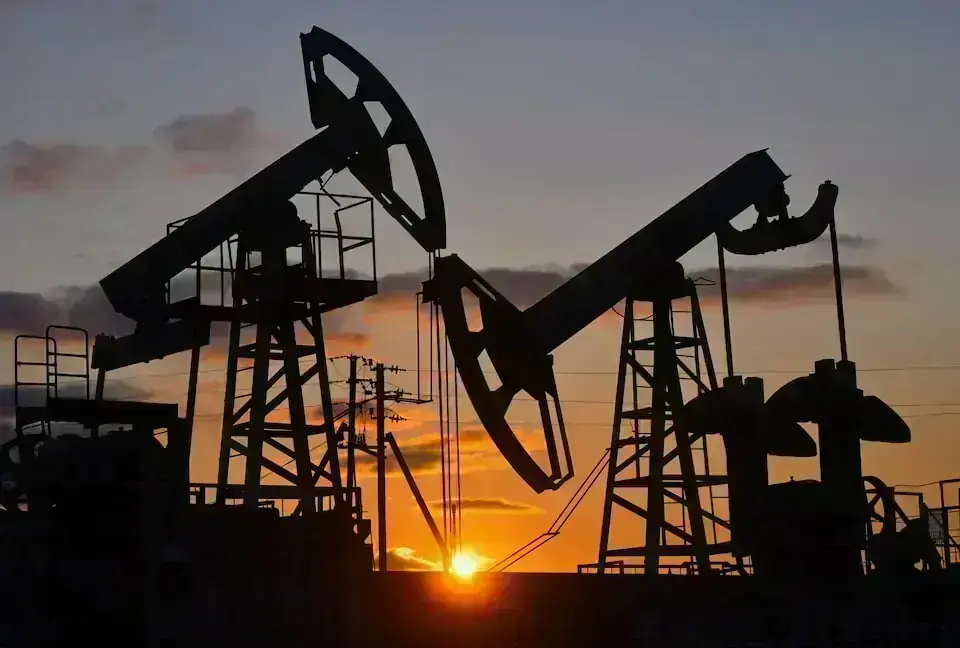
NEW YORK: Oil prices settled about 1 percent higher on Monday as worries about energy supplies mounted following new strikes on Saudi Arabian energy infrastructure and attacks on ships in the Middle East.
Both crude benchmarks jumped almost 5 percent, then retreated from session highs after US President Donald Trump said Iran wanted to reach a deal with Washington.
Brent futures rose USD1.07, or 1.0 percent, to settle at USD105.68 per barrel, while US West Texas Intermediate (WTI) crude rose USD1.34, or 1.3 percent, to settle at USD101.39.
READ MORE: Oil falls but on track for sharp weekly gain on supply concerns; US diesel hits record high
Yemen’s Iran-backed Houthis launched a new attack on Saudi Arabia, and Gulf Arab states postponed planned talks with Iran, underscoring fears that the Middle East conflict could spread further and threaten global oil supplies.
The Houthis said they fired dozens of missiles and drones at a military airbase in Khamis Mushait in southern Saudi Arabia, targeting aircraft hangars, radar systems, runways and ammunition depots in retaliation for Saudi airstrikes in Yemen.
The Houthis have advanced rapidly in Yemen in recent days, capturing territory including Perim Island at the mouth of the Red Sea on Friday. A separate attack the same day, which Riyadh blamed on Iran-backed fighters in Iraq, knocked out Saudi Arabia’s east-west pipeline, which allows Gulf oil exports to bypass the blockaded Strait of Hormuz. The pipeline strike threatened up to 4 percent of global oil supply.
Commodity vessel transits through the Strait of Hormuz fell to a single digit per day at the weekend, preliminary ship tracking data showed on Monday, well below a 10-day average of 14.
Before the US and Israel attacked Iran in late February, about a fifth of the world’s oil supplies passed through the Strait of Hormuz.
With the Saudi east-west pipeline out of service, the Red Sea port of Yanbu must draw on storage, which is estimated to cover five to seven days of exports, according to three industry sources.
Russia, Ukraine and interest rates
Trump also said Ukraine and Russia had agreed not to hit each other’s energy targets. Last week, Ukrainian hits on Russian energy infrastructure helped push average US diesel prices to record highs.
Any deal to end the Russia-Ukraine war could allow Russia to export more energy. Russia, an OPEC+ member, was the world’s third-biggest crude oil producer behind the US and Saudi Arabia in 2025, according to US energy data.
Also pressuring oil prices, investors bet that US Federal Reserve policymakers will lift their benchmark interest rate a quarter of a percentage point, to a 3.75 percent-4.00 percent range, on Wednesday and signal further tightening ahead.
Fed Chair Kevin Warsh dislikes giving guidance about rates, but investors expect rate hikes due to elevated inflation, oil at more than USD100 a barrel, and his emphasis on the need to deliver price stability and to pay attention to signals from financial market pricing.
Higher interest rates increase consumer borrowing costs and can reduce economic growth and demand for energy.






















Comments